

Iran Strikes US Military Targets in Jordan, UAE in Retaliation for US Attack on Larak Island
Monday, 31 August 2026
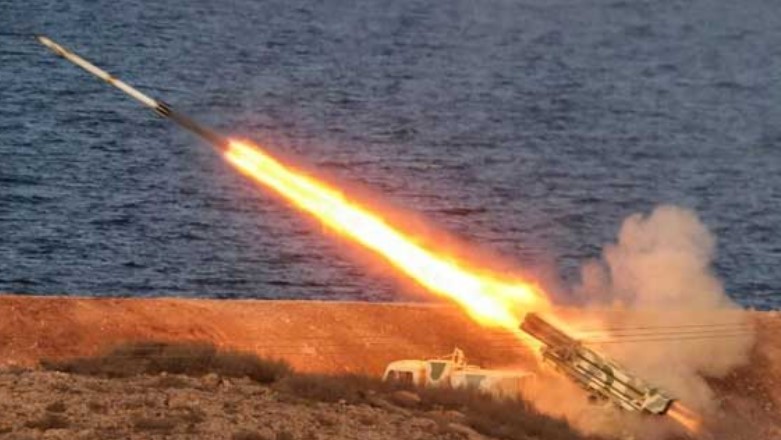
Trump’s latest stance on Iran attack sparks fresh escalation as UAE denies Iranian missile strike on Al Minhad Air Base
Web Desk
TEHRAN/WASHINGTON: In a fresh flare-up of hostilities, Iran has launched retaliatory attacks against US military positions in the Middle East, targeting American-linked facilities in Jordan and the UAE after the US carried out strikes on Iran’s Larak Island in the strategically vital Strait of Hormuz.
The latest retaliatory exchange marks a fresh and potentially dangerous escalation in the six-month-old US-Iran conflict, just as diplomatic efforts had raised hopes of containing hostilities especially after the recent visit of Chief of Defence Forces (CDF) and Chief of Army Staff Field Marshal Asim Munir to Iran.
Iran’s Islamic Revolutionary Guard Corps (IRGC) said on Monday it had fired ballistic missiles at two US military air bases in Jordan, claiming the strikes inflicted “heavy damage.” Tehran said the attacks were carried out in response to what it described as US-Israeli aerial aggression against Iranian positions on Larak Island, where Iranian military personnel and civilians were reportedly killed and wounded.
The Iranian Foreign Ministry separately confirmed that Iranian forces had targeted US military bases in Jordan, claiming that the facilities had been used to launch and support the American operation against Larak Island.
Iranian President Masoud Pezeshkian said Tehran was not seeking a wider war but would respond forcefully to military aggression. “We are not seeking war, but we will deliver a decisive response to the aggressors,” Pezeshkian said, according to Iranian state television.
Iran Targets US Positions in Jordan
The IRGC said its ballistic-missile operation against US military bases in Jordan was a direct response to the American attack on Larak Island. Jordanian authorities, however, reported that their air defenses had intercepted eight missiles, without publicly identifying their origin.
Iran maintained that the US facilities in Jordan played a role in the Larak operation and warned that Washington and countries supporting American military actions would bear responsibility for any further escalation.
The Iranian Foreign Ministry said Tehran would respond decisively to any additional military aggression against its territory.
The latest strikes represent a significant expansion of the confrontation because Jordan, a close US ally, has so far sought to avoid becoming a direct battlefield in the escalating regional conflict.
Iran Says It Also Targeted US Forces in UAE
Iran also claimed to have targeted American military personnel and assets at Al Minhad Air Base in the UAE.
Iranian state television, citing the Iranian army, reported that drones were used against locations at the base where US forces and helicopters were stationed. Tehran said the operation was conducted in retaliation for the killing of Iranian Revolutionary Guards personnel and civilians during the US attack on Larak Island.
The Iranian military described the operation as part of its broader response to the American strikes and said US military assets in the region could remain targets if attacks against Iran continued.
UAE Rejects Reports of Iranian Missile Attack
The UAE, however, strongly denied that Al Minhad Air Base had been targeted by Iranian missiles, directly contradicting reports coming from Tehran.
The UAE Ministry of Defence described media reports of a missile attack on Al Minhad as “baseless” and said the country’s armed forces remained on a high state of readiness. Abu Dhabi said its military was prepared to respond to threats in a manner designed to protect the UAE's sovereignty, security and stability.
The UAE separately confirmed that its air force had engaged a drone that came from Iran over Emirati territorial waters. The authorities did not provide further details about the drone or clarify whether it had been destroyed or what its intended target was.
The conflicting accounts have added another layer of uncertainty to an already rapidly developing military confrontation.
US Strikes Larak Island
Iran’s retaliation followed a US military operation on Sunday against Iranian rocket-launching capabilities on Larak Island, located in the Strait of Hormuz.
Washington said the strikes were intended to prevent Iranian forces from laying additional naval mines in the strategic waterway.
US Central Command said American forces had taken “limited, precise action” against IRGC forces involved in mine-laying operations that Washington considered an imminent threat.
The United States said its forces had recently completed an operation to clear mines from international shipping routes in the Strait of Hormuz and were monitoring the area to protect commercial navigation.
Iran, however, said the American operation caused casualties among Iranian military personnel and civilians, prompting Tehran's latest military response.
Trump Administration Faces Fresh Test
The latest escalation presents a major challenge for US President Donald Trump, whose administration has recently shifted greater emphasis from direct military operations toward economic pressure and sanctions against Tehran.
The Trump administration has described its campaign against Iran as “economic warfare”, while continuing to maintain US military forces across the region.
US Treasury Secretary Scott Bessent has indicated that Washington intends to impose additional secondary sanctions on Iranian-linked financial institutions and businesses, with further measures expected on a regular basis.
The administration's strategy has focused increasingly on restricting Iran's access to international banking and dollar-based financial networks rather than relying solely on military strikes.
The new Iranian attacks, however, could put renewed pressure on Washington to respond militarily.
Strait of Hormuz Remains at the Center of the Conflict
The Strait of Hormuz remains the central flashpoint in the confrontation. The narrow strategic waterway is one of the world's most important energy routes, with roughly one-fifth of global oil supplies historically passing through it.
Iran has effectively restricted shipping through the strait during the conflict, while the US has attempted to keep international shipping lanes open.
The US military has said it recently completed the clearing of sea mines from international shipping routes but warned that American forces remain prepared to protect freedom of navigation. Iran, meanwhile, has continued to assert control over security conditions in the waterway.
In a separate development on Monday, Iranian state television reported that an oil supertanker had been hit by two naval mines in the southern Strait of Hormuz and caught fire. The IRGC said the vessel had attempted to pass through the waterway in violation of Iranian security rules, although it did not identify the ship or provide details about its crew.
Oil Prices Rise as Markets React
The renewed fighting immediately affected global energy markets. Both major crude oil benchmarks rose by at least 2 per cent on Monday, with Brent crude again moving above the symbolic $90-a-barrel level, while West Texas Intermediate climbed above $85.
Any prolonged disruption in the Strait of Hormuz could further increase energy prices and create additional pressure on global fuel, fertilizer and shipping markets.
The conflict has already contributed to higher prices and shortages in several parts of the world.
Six-Month War Enters Dangerous New Phase
The latest exchange of attacks comes after the US-Iran conflict passed its six-month mark and at a time when the intensity of fighting had appeared to decline.
A ceasefire reached in April brought an end to the most intense phase of the fighting, while a memorandum of understanding aimed at paving the way toward a final peace agreement was signed in June. However, no comprehensive peace agreement has emerged.
Diplomatic efforts involving mediators including Pakistan and Qatar have continued, but repeated military incidents around the Strait of Hormuz have undermined prospects for a lasting settlement.
The latest Iranian strikes on US-linked military positions in Jordan and the UAE, coupled with the US attack on Larak Island, now risk triggering another cycle of retaliation across the region.
Washington Faces Political Pressure
The war has also become increasingly controversial inside the US, with congressional midterm elections scheduled for November.
Democratic Senator Jack Reed, the top Democrat on the Senate Armed Services Committee, recently criticised the Trump administration's handling of the conflict, arguing that the war had failed to achieve its objectives and had weakened the US position internationally and in the Middle East.
The renewed Iranian attacks could therefore intensify both domestic political debate in Washington and international concerns about the possibility of a broader regional war.
Fresh Flare-Up Raises Risk of Wider Conflict
With Iran claiming successful retaliatory strikes against US military positions in Jordan and the UAE, Washington defending its Larak operation as a limited effort to prevent further mining of the Strait of Hormuz, and Abu Dhabi rejecting Tehran's account of a missile attack on Al Minhad, the latest confrontation remains clouded by sharply conflicting claims.
What began as a dispute centered on Iran's activities in the Strait of Hormuz has once again expanded into a wider regional confrontation involving Iran, the United States and their respective allies.
The immediate question now is whether Washington will respond to Iran's latest attacks and whether Tehran's warning of a “decisive response” will lead to further military action, or whether diplomatic channels can once again prevent the six-month conflict from entering an even more dangerous phase.



More from World News





Comments
No comments yet. Be the first to comment!
Leave a Comment