

Arafat’s six-for lights up Pakistan’s commanding win over England
Tuesday, 20 October 2026

Hasan Nawaz, Arafat Minhas and Faheem Ashraf power Pakistan to 302 before the left-arm spinner dismantles England; Shaheen’s astute captaincy and timely bowling changes seal a 87-run victory
Hamid Khan Wazir
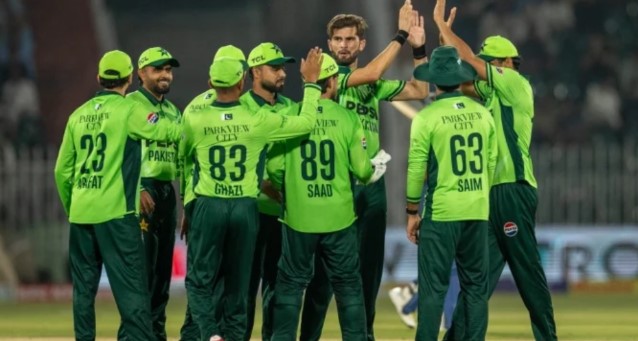
RAWALPINDI: Pakistan produced a commanding all-round performance to defeat England by 87 runs in the second match of the ODI Tri-Series at Rawalpindi on Tuesday, with Arafat Minhas delivering a sensational six-wicket haul and Hasan Nawaz leading the batting charge to underline the team’s growing confidence and collective strength.
After posting a competitive 302 for nine in their allotted 50 overs, Pakistan bowled England out for 215 in 38.4 overs, combining disciplined bowling, sharp fielding and inspired leadership from captain Shaheen Shah Afridi to secure an emphatic victory and maintain the momentum generated by their impressive start against Sri Lanka.
Arafat emerged as the undisputed star of the contest, producing a superb all-round display with a valuable 59 off 58 balls before returning to claim six wickets for just 40 runs in 8.4 overs. His performance proved decisive in turning a competitive total into a convincing win, as England’s batting line-up crumbled under sustained pressure.
Hasan also made a significant contribution with an aggressive 79 off 74 deliveries, striking five fours and four sixes, while Faheem Ashraf provided the late acceleration Pakistan needed with a brisk 39 off 26 balls. Together, the three contributions demonstrated the depth and versatility of a Pakistan side increasingly capable of finding match-winners in different departments.
Arafat steals the show with bat and ball
Arafat’s performance was the defining feature of Pakistan’s victory. Walking in after the dismissal of Saad Baig, he showed composure and attacking intent, building a valuable partnership with Hasan that helped Pakistan recover from a middle-order slowdown and establish a strong platform for the final overs.
His 59 included nine boundaries, and he maintained a strike rate above 100, ensuring that Pakistan did not lose momentum after Hasan’s departure for 79 in the 40th over.
Arafat continued to impress when Pakistan took the field, breaking England’s resistance at crucial stages. He removed Tom Banton, who had scored 57 off 53 balls, before dismissing Harry Brook, Jordan Cox, Will Jacks, Jamie Overton and Adil Rashid to complete a remarkable six-wicket haul.
His wickets came at critical moments, preventing England from building the partnerships required to chase down the target. The dismissal of Banton was particularly important, as the opener had helped England recover from the early loss of Ben Duckett and appeared capable of anchoring the chase.
Arafat’s intervention after the 120-run second-wicket partnership had developed into a dangerous prospect proved instrumental. He also helped end England’s lower-order resistance, leaving the visitors unable to recover from the collapse.
The young all-rounder’s contribution offered Pakistan a major boost, highlighting the value of a player capable of strengthening both the batting and bowling departments in the same match.
Hasan lays the foundation, Faheem delivers the late surge
Pakistan’s innings began disastrously when Fakhar Zaman was dismissed for a golden duck, but Saim Ayub and Babar Azam attempted to stabilise the innings before England struck again.
Babar contributed 34 from 52 deliveries, while wicketkeeper-batter Saad Baig made a composed 35 off 54 balls. Their efforts helped Pakistan negotiate a difficult phase, although the scoring rate remained modest during the middle overs.
With Pakistan at 133 for five, Hasan took responsibility for lifting the tempo. He attacked the England bowlers with confidence, finding the boundary regularly and clearing it four times to keep the innings moving at a healthy rate.
His dismissal at 211 for six brought Arafat and Faheem together for a crucial late-innings surge. Faheem then produced one of the most valuable cameos of the innings, striking five fours and a six to score 39 from only 26 balls. His aggressive approach helped Pakistan collect 91 runs in the final 10 overs, pushing the total to 302 for nine and placing considerable pressure on England’s chase.
Shaheen added an unbeaten 10 from five deliveries, while Haris Rauf finished not out on four from two balls as Pakistan crossed the 300-run mark. For England, Sonny Baker claimed three wickets, while Gus Atkinson took two. Jamie Overton, Adil Rashid, Will Jacks and Sam Curran picked up one wicket apiece.
Shaheen’s captaincy makes the difference
While Arafat’s figures attracted the headlines, Shaheen’s leadership was another major factor behind Pakistan’s comprehensive victory. The Pakistan captain showed sound tactical judgement in managing his bowling resources, keeping the pressure on England and using Arafat effectively as the innings progressed. The timing of the bowling changes helped Pakistan break partnerships before the visitors could establish control of the chase.
England made a promising start through Duckett and Banton, who put on 91 runs for the opening wicket. Duckett scored 45 from 46 balls, striking eight fours, while Banton played an aggressive innings that briefly gave England hope of mounting a serious challenge.
Haris Rauf broke the opening stand by dismissing Duckett, and Naseem Shah subsequently removed Joe Root for 33, preventing England from consolidating after Banton’s departure.
Arafat then took charge, striking repeatedly as Shaheen maintained pressure from both ends. The captain also contributed in the field, taking the catch to dismiss Will Jacks, while his management of the attack ensured England were unable to establish a decisive partnership.
Shaheen finished with figures of none for 36 from seven overs. Although he did not take a wicket himself, his role in directing the attack and maintaining the team’s intensity was significant. His contribution illustrated that effective captaincy is not measured by personal bowling figures alone, but also by the ability to bring the best out of the entire side.
Nawaz’s contribution adds to Pakistan’s growing depth
Hasan Nawaz’s innings was equally important in shaping the result. His 79 provided Pakistan with the stability and acceleration needed after a series of early and middle-order setbacks.
He showed patience when the innings required consolidation and shifted gears when opportunities arose, combining sensible shot selection with timely aggression. His partnership with Arafat helped Pakistan regain control and set up the late assault that carried the total beyond 300.
The contributions of Hasan, Arafat and Faheem also highlighted Pakistan’s improving batting depth. Rather than relying on one established batter to carry the innings, the team received meaningful runs from different positions, with the lower middle order ensuring that the final overs were productive.
The collective effort was particularly encouraging after the early dismissal of Fakhar and the subsequent loss of wickets at regular intervals. Pakistan recovered through partnerships and finished strongly, demonstrating the resilience required to compete consistently in one-day cricket.
England’s chase collapses under pressure
England appeared well placed at 91 without loss, but Pakistan’s bowlers gradually dismantled the batting order after the breakthrough against Duckett.
Banton’s dismissal at 120, followed by Brook’s departure for five, shifted the momentum decisively in Pakistan’s favour. Root’s dismissal at 165 left England increasingly dependent on the middle and lower order, while Curran’s departure at 177 further weakened their position.
Arafat then tore through the remaining batting line-up, with England losing their final five wickets for just 18 runs. The collapse reflected Pakistan’s ability to sustain pressure and capitalise on breakthroughs rather than allowing England to rebuild.
Haris supported Arafat with two wickets, dismissing Duckett and Curran, while Naseem accounted for Root. Faheem and Saim Ayub also contributed to the bowling effort, with Saim conceding 47 runs in eight overs. England were eventually dismissed for 215 in 38.4 overs, falling 87 runs short of their target of 303.
Pakistan carry the momentum forward
The victory was significant not only for its margin but also for the manner in which it was achieved. Pakistan recovered from a difficult start with the bat, produced an imposing total through contributions from several players and then defended it with disciplined bowling and effective fielding.
Arafat’s exceptional all-round performance, Hasan’s attacking half-century and Faheem’s late acceleration supplied the individual brilliance, while Shaheen’s captaincy and the supporting efforts of the bowling attack ensured that those contributions translated into a convincing team result.
Pakistan’s encouraging start against Sri Lanka had provided an early platform, and the performance against England showed their ability to carry that momentum into another demanding contest. The balance between batting depth, bowling variety and leadership offered further evidence of a team growing in confidence as the tri-series progresses.
With Arafat emerging as a potential match-winner, Hasan delivering under pressure and Shaheen marshalling his resources effectively, Pakistan will take considerable encouragement from a victory built on both individual excellence and collective responsibility.



More from Sports News




Comments
No comments yet. Be the first to comment!
Leave a Comment