

Iran’s Supreme Leader Vows Revenge for Ayatollah Ali Khamenei’s Killing as Tensions With US Remain High
Saturday, 11 July 2026
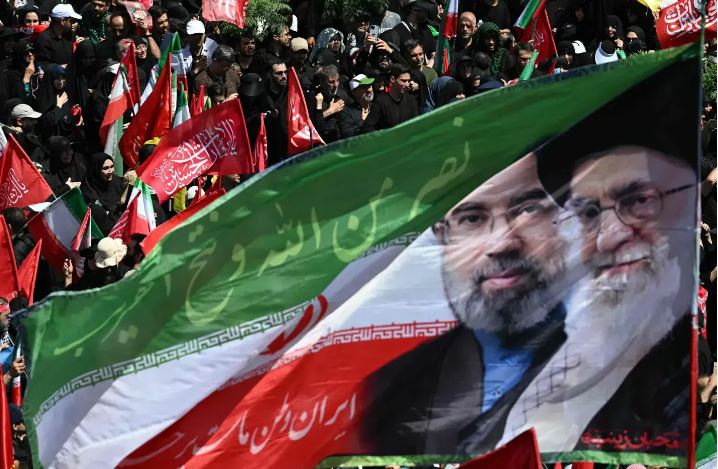
Fresh warnings from both sides follow recent military clashes, rising casualties and renewed efforts to secure shipping through the Strait of Hormuz, as Washington and Tehran keep diplomatic channels open.
TEHRAN: Iran's Supreme Leader Ayatollah Mojtaba Khamenei has pledged to pursue retaliation for the killing of his father and predecessor, Ayatollah Ali Khamenei, declaring that revenge remains "the nation's demand" despite ongoing diplomatic efforts to prevent further escalation with the United States.
In his first public statement since his father's funeral ceremonies began last week, Mojtaba Khamenei said those responsible for the assassination would be held accountable. The message, carried by Iranian state media, described the pledge as both a national and religious obligation, while suggesting that support for Iran's position extended beyond its borders.
"We pledge to avenge the blood of the martyred leader and all the martyrs of these two wars," the statement said, adding that people around the world would play a role in achieving what it described as a "divine mission."
Ayatollah Ali Khamenei was killed in a US-Israeli airstrike at the outset of the conflict on February 28, a development that dramatically intensified regional tensions and reshaped Iran's political leadership. Mojtaba Khamenei assumed the position of supreme leader on March 8 with the backing of the country's powerful Revolutionary Guards.
The latest statement comes after several days of renewed military exchanges that have cast uncertainty over an interim understanding aimed at halting months of hostilities. Although both sides have accused each other of violating the arrangement, diplomatic contacts have continued in an effort to prevent another round of large-scale fighting.
US President Donald Trump said on Friday that discussions between Washington and Tehran would continue despite the recent flare-up. However, he also warned that any attempt to target him would trigger an overwhelming military response.
In a message posted on his Truth Social platform, Trump said the United States was prepared to respond decisively to any assassination attempt against the American president, warning of severe consequences for Iran if such a scenario were to occur.
Meanwhile, Mojtaba Khamenei has remained out of public view since the airstrike that reportedly left him with injuries.
Iranian Foreign Minister meets his Omani counterpart
Diplomatic efforts have also shifted toward safeguarding one of the world's most important energy routes. Iranian Foreign Minister Abbas Araghchi met his Omani counterpart, Badr al-Busaidi, in Muscat to discuss regional developments and mechanisms to ensure the safe passage of commercial vessels through the Strait of Hormuz.
The talks focused on maritime security and maintaining navigation through the strategic waterway, which handles a significant share of global oil shipments. Oman has continued to play a mediating role between Tehran and Washington during the crisis.
Separately, Iran's Health Ministry said the death toll from US strikes carried out earlier this week has risen to 17, while 115 people were injured. According to ministry officials, most of the wounded have been treated and discharged, while several patients underwent surgery.
The latest escalation followed US allegations that Iran had targeted commercial shipping in the Strait of Hormuz. Washington responded with strikes on Iranian military facilities, while Tehran launched retaliatory drone and missile attacks against what it described as US military positions in the Gulf region.
Although a Pakistan-brokered memorandum of understanding helped reduce hostilities last month, the latest exchange of threats and military action highlights the fragile nature of the ceasefire and the continued risk of renewed conflict in the region.

More from World News

Comments
No comments yet. Be the first to comment!
Leave a Comment