

Lionel Messi: The Iconic Footballer Bids Farewell — 21 Years, 207 Games, 125 Goals, a Legacy of Records
Tuesday, 01 September 2026
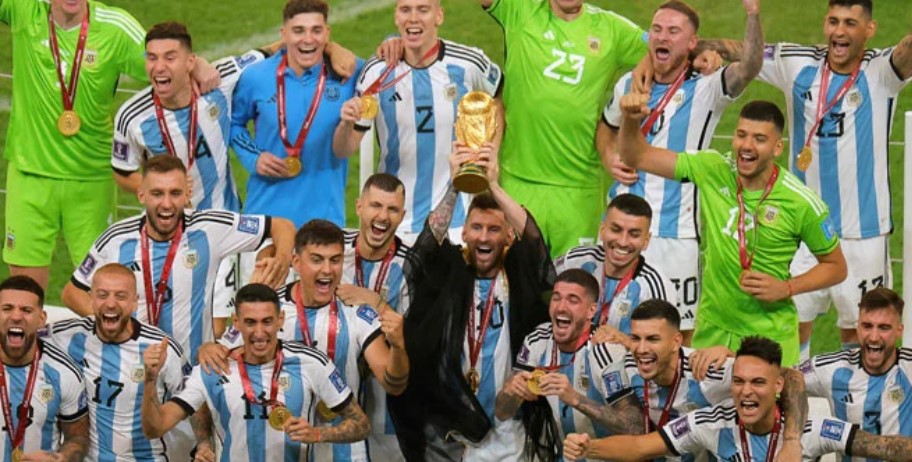
From a teenage debut and years of heartbreak to the World Cup crown, six World Cups and an extraordinary collection of records, Messi leaves international football with a legacy that may never be repeated
Sports Desk
BUENOS AIRES: The iconic footballer and undisputed GOAT, Lionel Messi, has brought the international chapter of his extraordinary career to a close, ending a remarkable 21-year journey with Argentina.
From an 18-year-old prodigy making his debut to becoming the nation’s most-capped player, all-time leading goalscorer and World Cup-winning captain, Messi leaves behind a legacy that has forever changed the history of Argentine and world football.
At 39, Messi leaves the Argentina national team after 207 appearances and 125 goals, figures that place him comfortably at the top of his country's all-time charts. His final appearance came in the 2026 FIFA World Cup final, where Argentina were beaten 1-0 by Spain after extra time.
The defeat denied Messi the perfect farewell, but it did little to diminish a legacy built over two decades. His international career ultimately became a remarkable story of transformation: from a gifted youngster repeatedly questioned for his inability to deliver a major trophy for Argentina to the captain who eventually brought the World Cup back to Buenos Aires.
International media reports said Messi announced his decision on August 31, describing the moment as painful but acknowledging that he believed the time had come to step away.
A teenager arrives and immediately makes history
Messi's Argentina career began in 2005, when the teenager made his senior debut. His first appearance was memorable for an unfortunate reason: he was sent off shortly after coming on against Hungary.
A year later, however, he began writing the first pages of his World Cup story.
Messi featured at the 2006 World Cup in Germany and scored against Serbia and Montenegro, becoming one of the youngest Argentine players to make an impact at football's biggest tournament.
That appearance proved to be the beginning of an unprecedented World Cup journey.
2014: The first World Cup final
By the time Argentina reached Brazil for the 2014 World Cup, Messi was already one of the world's dominant players after years of extraordinary performances with Barcelona.
He scored four goals during the group stage and carried Argentina through the knockout rounds to their first World Cup final since 1990.
Germany eventually won the final in extra time, leaving Messi with the Golden Ball as the tournament's outstanding player but without the trophy he wanted most.
The disappointment would become one of several defining moments in his relationship with Argentina.
The darkest moment came in 2016
Messi's next major opportunity arrived at the 2015 Copa America, where Argentina again reached the final but lost to Chile on penalties.
A year later, the same opponents stood between Messi and his first senior international trophy at the Copa America Centenario in the United States. Argentina again lost on penalties, with Messi missing his attempt.
The emotional impact was enormous. Messi briefly announced his retirement from international football, believing he had exhausted every possible route to success with the national team.
But the retirement lasted only weeks.
He returned — and everything changed.
Scaloni's Argentina transforms Messi's international story
The appointment of Lionel Scaloni as Argentina coach in 2018 became a turning point.
The team gradually developed into a more balanced and confident side, while Messi increasingly became the central figure of a generation that would finally deliver the trophies Argentina had been chasing.
In 2021, the breakthrough arrived.
Argentina defeated Brazil at the Maracanã to win the Copa America, ending a 28-year wait for a major senior international trophy.
For Messi, it was more than another medal.
It was the first major senior title of his Argentina career and the moment when the narrative surrounding him and his national team began to change permanently.
The Finalissima and the greatest prize of all
Argentina continued their remarkable run by defeating Italy in the 2022 Finalissima.
Then came Qatar.
At the 2022 FIFA World Cup, Messi produced perhaps the defining tournament of his career.
At 35, he scored seven goals and contributed three assists in seven matches, leading Argentina through a dramatic campaign that culminated in one of the most memorable World Cup finals ever played.
Argentina drew 3-3 with France after extra time before winning the penalty shootout.
Messi scored twice during the final and converted his penalty in the shootout, finally lifting the trophy that had eluded him throughout his career.
He also achieved a unique World Cup feat by scoring in every knockout stage of the tournament as well as the group phase.
The World Cup victory completed the missing piece of his international résumé and established him alongside the greatest figures in Argentina's football history.
Another Copa America triumph
Rather than immediately walking away after Qatar, Messi continued. In 2024, Argentina won another Copa America title, defeating Colombia in the final.
The victory gave Messi his second Copa America crown and strengthened Argentina's extraordinary run under Scaloni.
The team had moved from repeated disappointment to an era of sustained success, with Messi at its centre.
Six World Cups and another chapter in 2026
Messi returned for the 2026 World Cup in North America and entered the tournament at an age when most players are long retired from international football.
Instead of simply making up the numbers, he continued to produce decisive performances.
The tournament became his sixth World Cup, a record he shared with only a select group of players before the 2026 edition.
He scored eight goals during the tournament, taking his World Cup career total to 21, and finished the competition as Argentina's leading scorer.
FIFA records show that Messi ultimately played 34 World Cup matches, the most in tournament history. He also became the competition's all-time leader in World Cup victories, with 23 wins.
His World Cup scoring record is equally extraordinary: 21 goals across six tournaments, placing him second on the all-time World Cup scoring list after Kylian Mbappe.
Argentina once again reached the final, but Spain ended their campaign with a 1-0 extra-time victory.
It was not the ending Messi might have imagined, but it was nevertheless the final match of an extraordinary international career.
Argentina's greatest goalscorer and appearance-maker
Messi leaves the national team with records that underline the scale of his contribution.
He finished with 207 Argentina appearances — a national record; 125 Argentina goals — a national record; 34 World Cup appearances — an all-time tournament record; 21 World Cup goals; Six World Cup appearances; 23 World Cup victories — a tournament record; Eight goals at the 2026 World Cup; World Cup champion in 2022; Copa America champion in 2021 and 2024 and Olympic gold medallist in 2008.
His record of nine consecutive World Cup appearances with a goal is another remarkable milestone, while his six World Cup campaigns span an extraordinary 20-year period.
Barcelona: where the legend was built
Although Messi's international retirement marks the end of one chapter, his club career had already established him as one of football's most statistically dominant players.
At Barcelona, Messi spent 17 first-team seasons and made 778 official appearances, scoring 672 goals.
He won 35 trophies with the Catalan club, including: 10 La Liga titles; 7 Copa del Rey titles; 8 Spanish Super Cups; 4 UEFA Champions League titles; 3 FIFA Club World Cups and 3 UEFA Super Cups.
Barcelona's official records also credit Messi with the club's appearance record, goalscoring record and trophy record.
His individual numbers were just as extraordinary.
He scored 50 goals in La Liga during the 2011-12 season, still the benchmark for a single Spanish top-flight campaign, and finished his Barcelona career as La Liga's all-time leading scorer with 474 goals.
The 91-goal year
One number perhaps best captures the extraordinary peak of Messi's attacking brilliance.
In 2012, he scored 91 goals in the calendar year, surpassing Gerd Müller's previous mark.
The achievement remains one of the most famous individual scoring records in modern football.
He also became the first player to score more than 700 goals at club level, while his 672 official goals for Barcelona made him the leading scorer for a single club at the time, surpassing Pelé's previous Santos record of 643.
Eight Ballon d'Or awards
Messi's individual trophy cabinet is almost as remarkable as his team honours.
He has won the Ballon d'Or eight times, the most in the history of the award.
His victories came in 2009, 2010, 2011, 2012, 2015, 2019, 2021 and 2023.
His individual résumé also includes multiple European Golden Shoes and an extraordinary number of domestic and continental scoring records.
Success beyond Barcelona
After leaving Barcelona in 2021, Messi moved to Paris Saint-Germain, where he won domestic honours before making another historic move in 2023.
His arrival at Inter Miami changed the profile of football in the United States and immediately produced silverware.
Messi helped Miami win the 2023 Leagues Cup and later the Supporters' Shield.
In 2025, he added another remarkable chapter by helping Inter Miami win the MLS Cup and was named the competition's MVP. He also won the MLS Golden Boot after scoring 29 league goals and providing 19 assists during the regular season.
More than goals and trophies
Messi's significance cannot be measured solely through statistics.
His career changed perceptions of what a forward could do. He combined extraordinary close control, acceleration, vision, passing and finishing with an ability to create chances for teammates while remaining one of football's most prolific scorers.
For Argentina, however, his greatest achievement may have been changing the emotional story surrounding the national team.
For years, Messi was compared with Diego Maradona and judged against the 1986 World Cup-winning icon. Eventually, he stopped chasing Maradona's legacy and created his own.
The 2022 World Cup provided the defining image: Messi lifting the trophy in Qatar as Argentina celebrated a championship that had once seemed beyond his reach.
A legacy that will be difficult to reproduce
Messi leaves international football after 21 years, 207 matches, 125 goals, six World Cups, two Copa America titles, an Olympic gold medal and a World Cup championship.
His final international chapter ended in defeat, but his career cannot be defined by one result.
The numbers tell one story: records, trophies, goals and milestones accumulated across more than two decades.
The broader story is even more remarkable. Messi entered international football as a teenager still searching for his place. He endured criticism, lost major finals, briefly walked away, returned, won the Copa America, conquered the World Cup and ultimately departed as Argentina's undisputed statistical leader.
His international career is over.
His records remain.
And for a generation of football fans, the image of Argentina's No. 10 carrying the ball, wearing the captain's armband and lifting the World Cup will remain one of the defining images of modern football.


More from Sports News




Comments
No comments yet. Be the first to comment!
Leave a Comment