

BCB Chief in Pakistan for Key Meeting with PCB’s Naqvi ahead ICC talks on India Match Boycott
Sunday, 08 February 2026
Past ICC Decision in India–Pakistan Boycott Case strengthens PCB’s Position
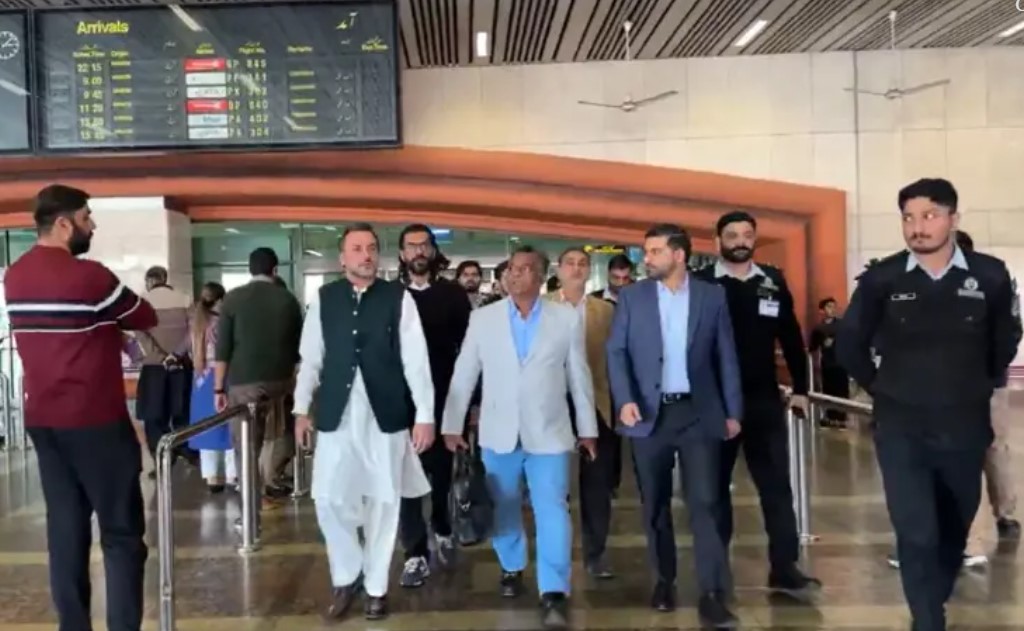
LAHORE: In the aftermath of Pakistan's announcement to boycott its T20 World Cup 2026 match against India to express solidarity with Bangladesh, Bangladesh Cricket Board (BCB) President Aminul Islam on Sunday landed in Lahore and is set to hold multiple meetings, the Pakistan Cricket Board (PCB) said.
The visit coincides with the arrival of a key International Cricket Council (ICC) delegation, led by its deputy chairman, which is expected to facilitate ice-breaking talks among stakeholders as efforts intensify to prevent the issue from escalating into a broader cricketing standoff between Pakistan and India.
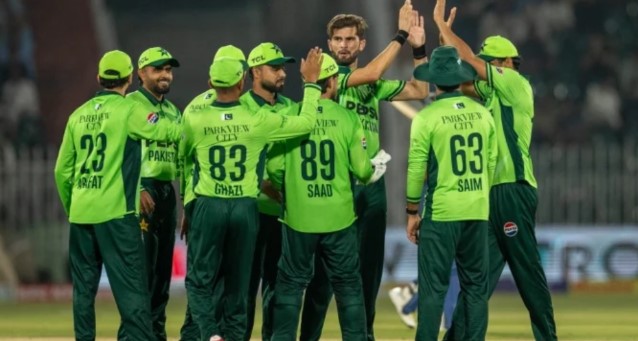
The development comes against the backdrop of Pakistan’s decision to boycott its World Cup match against India, scheduled for February 15, amid what the PCB has described as the ICC’s biased approach, with Bangladesh playing a central role in the dispute.
The BCB chief was welcomed at the airport by Pakistan Super League (PSL) CEO Salman Naseer — also an adviser to the PCB chief — and other officials. According to the PCB press release, Islam will hold a meeting with PCB Chairman Mohsin Naqvi before departing for Dhaka.
According to reports, a high-level ICC delegation is set to meet the Pakistan Cricket Board (PCB) chairman, Mohsin Naqvi, here today to resolve the ongoing deadlock over the India-Pakistan clash in the ICC Men’s T20 World Cup 2026. During his stay in Pakistan, the BCB chief will attend the ICC’s emergency meeting later today, with other board members also expected to participate.
While the ICC could raise the issue of potential financial damages if Pakistan does not withdraw its boycott decision, the PCB believes it is on solid ground, citing a past ICC ruling that rejected its own damages claim against India over the boycott of bilateral series—setting a precedent the board now plans to counter with.
The much-anticipated fixture between arch-rivals India and Pakistan, widely regarded as one of cricket’s most commercially significant contests, remains uncertain after the Government of Pakistan directed its national team not to take the field against India in Colombo.
The match is scheduled for February 15 and carries massive implications both financially and competitively.
The 20-team tournament has already been clouded by political tensions following Bangladesh’s refusal to play matches in India due to security concerns, a decision that led to their replacement by Scotland.
The BCB requested the ICC to shift its matches outside India, but the international cricket body rejected the plea. Following the BCB’s firm stance, the ICC replaced Bangladesh with Scotland in the tournament, saying it was not feasible to change the schedule so close to the February 7 start of the event.
In response to the development even before the official communication from the PCB, the ICC in a statement said the position of “selective participation is difficult to reconcile with the fundamental premise of a global sporting event where all qualified teams are expected to compete on equal terms per the event schedule”.
It expressed the hope that the PCB will consider the significant and long-term implications for cricket in its own country as this is likely to impact the global cricket ecosystem, which it is itself a member and beneficiary of.
Furthermore, a day before, the PCB has dismissed reports by Indian media claiming that it had offered dialogue to the ICC to resolve the issue surrounding its decision to boycott the India match.
PCB spokesperson Amir Mir issued the rebuttal after Indian journalist Vikrant Gupta claimed that the PCB had reached out to the ICC for dialogue on the India-Pakistan World Cup game.
Any clash between arch-rivals India and Pakistan is one of the most lucrative fixtures in cricket, worth millions of dollars in broadcast, sponsorship and advertising revenue.
In commercial terms, the overall value of a single India-Pakistan T20 match is estimated at around $500 million, or approximately INR45,000 crore, when broadcast rights, advertising premiums, sponsorship activations, ticket sales and downstream commercial activity are taken into account.
According to a report, advertising slots during an India-Pakistan T20 match command between INR25 lakh and INR40 lakh for a 10-second spot, significantly higher than even knockout matches involving India against other top teams.
The most immediate financial impact would be felt by the official broadcast rights holder, as advertising revenue from the India-Pakistan match alone is estimated at around INR300 crore, the Indian publication cited industry projections as suggesting.
The BCB chief’s arrival in Pakistan is also being viewed against the backdrop of earlier Indian media reports claiming that the ICC was pursuing back-channel diplomacy and had tasked its deputy chairman, Imran Khwaja, with engaging the PCB on the issue.
Within the PCB, there is a belief that the board holds a strong legal position should the matter escalate into a formal dispute. Officials have pointed to a previous case between the PCB and the Board of Control for Cricket in India (BCCI) that was taken to the ICC’s Dispute Resolution Committee (DRC). That case, however, involved a bilateral dispute arising from the BCCI’s failure to honour a 2014 memorandum of understanding to play six bilateral series between 2015 and 2023. While the PCB ultimately lost its claim for damages, it maintains that the ICC’s acknowledgment of the Indian government’s refusal to grant permission to the BCCI to play Pakistan sets an important precedent.
Credit: The Global Times


More from Sports News
Comments
No comments yet. Be the first to comment!
Leave a Comment