

Who Are Our Children Looking Up To
Wednesday, 23 September 2026
Fozia Zahoor
Every child is born with empty hands but searching eyes. Before learning to read books, children begin reading people.
No generation grows up without heroes. The only question is whether those heroes build character or merely create followers. Children rarely become what parents instruct; they often become what society celebrates. The first question, therefore, is not what children will become tomorrow. The first question is whom they admire today.
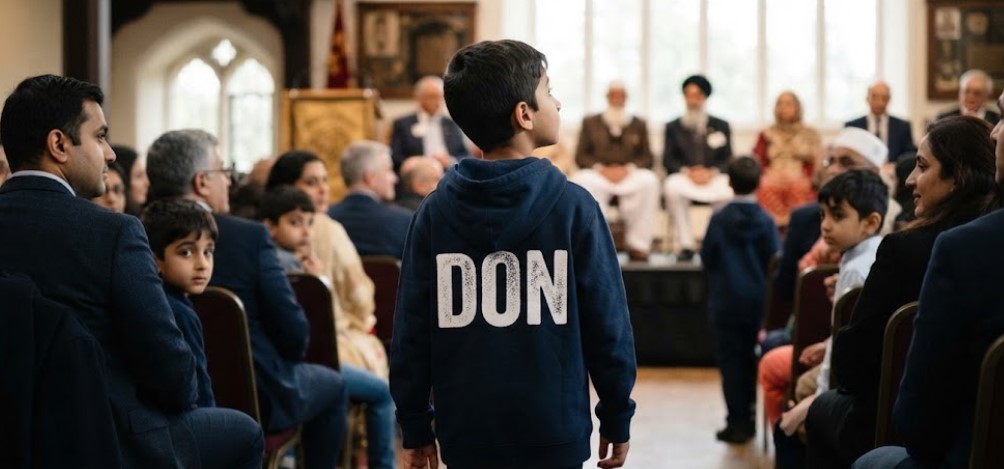
A formal gathering recently offered a quiet reminder. A young boy walked in wearing a shirt with the word “DON” boldly printed across the back. Perhaps it was only a fashion statement. Perhaps the meaning was never considered. Yet the image raises a larger question: when fictional gangsters become fashion statements, where do history’s real heroes go?
Clothing has become a language. Sometimes the words written on a T-shirt reveal more about a generation than the words written in its textbooks. A “BOSS” slogan, a skull, or a rebellious phrase may simply be fashion, but repeated symbols also tell us something about the images that surround young minds. Fashion is never just about fabric; it can also reflect admiration.
Every civilisation is shaped by the heroes it celebrates. Children cannot aspire to names they have never heard or stories they have never encountered. Heroes are first born in the imagination of a child before they are remembered in history.
The future does not ask what brands children wore. It asks what values they carried. Formal education does not always bring historical awareness. When roots are forgotten, even the finest branches of literature become difficult to recognise.
If a nation wishes to produce another Salahuddin Ayyubi, it must first teach children why Salahuddin still matters. The greatest inheritance parents can leave their children is not wealth, but worthy names to look up to.
A generation may know every trend yet remain uncertain about the values that once shaped its civilisation. The challenge is not to reject the present, but to ensure that the present does not erase the past.
More from Opinion News
Comments
No comments yet. Be the first to comment!
Leave a Comment