

When Social Media Stops Being Social
Wednesday, 29 July 2026
Fozia Zahoor
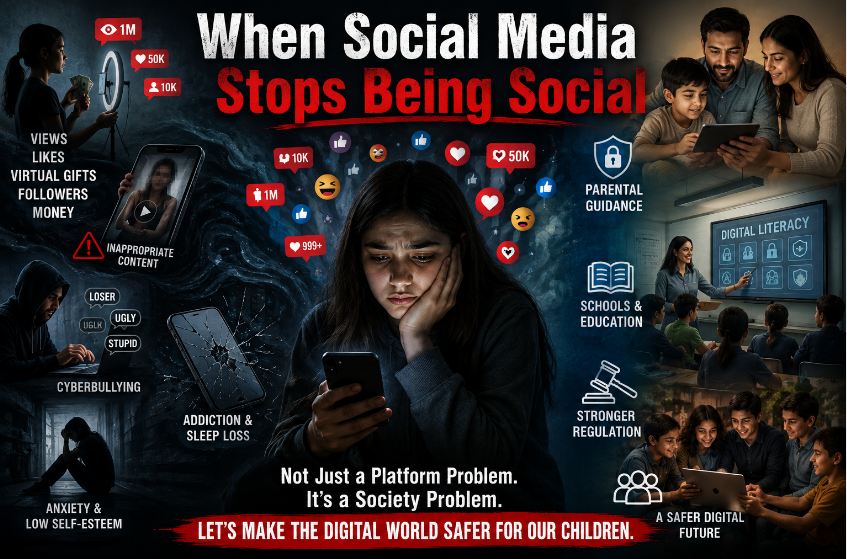
Social media was supposed to connect people, spread knowledge and make communication easier. Today, however, the race for likes, followers, views and virtual gifts has created a disturbing reality: anything capable of attracting attention can be turned into content—and attention has become money.
The real danger is not simply that inappropriate material exists online. The bigger question is why such content is able to flourish so easily, particularly when children and teenagers are among the audience.
Social-media platforms are businesses. Their success depends heavily on engagement: the longer people stay, the more they watch, react, share and spend, the more valuable the platform becomes. Unfortunately, sensational, shocking and provocative content often attracts attention faster than meaningful or educational material. This creates an unhealthy competition in which some content creators may cross moral boundaries simply to increase their reach and income.
This is where the responsibility of social-media companies becomes crucial. Community guidelines may exist, but rules are meaningless if enforcement is weak. Harmful content can spread rapidly before it is reported and removed. By then, thousands—or even millions—may already have seen it. A platform that can recommend content within seconds should also be capable of responding quickly when that content threatens the safety and wellbeing of its users.
But companies cannot carry the entire responsibility.
Parents must recognize that digital parenting is now part of parenting. Giving a child a smartphone without teaching him or her how to navigate the online world is like opening a door without explaining what lies beyond it. Children need guidance about privacy, inappropriate content, online strangers, cyberbullying, manipulation and the difference between popularity and value.
Schools also have a role to play. Digital literacy should not merely teach students how to use technology; it should teach them how to use it responsibly. Young people need to understand how algorithms influence what they see, how online trends are created and why everything that becomes viral is not necessarily worthy of imitation.
Governments and regulators must also move beyond temporary reactions. Instead of repeatedly responding to scandals after they become public, they should demand stronger age-verification systems, better protection for minors, transparent moderation and effective accountability.
The answer, however, is not to declare war on social media. These platforms can educate, connect, entertain and provide genuine opportunities. The problem begins when profit becomes more important than responsibility.
Ultimately, this is not merely a TikTok problem. It is a society problem.
The digital world is already part of our children's lives. We cannot simply wish it away. We must make it safer.
The question is no longer whether our children are living in a digital world. The question is: what kind of digital world are we leaving for them?


More from Opinion News






Comments
No comments yet. Be the first to comment!
Leave a Comment