

Pakistani Cricket Team: A Time of Disappointment
Tuesday, 17 February 2026
Muhammad Intisar ul Haq
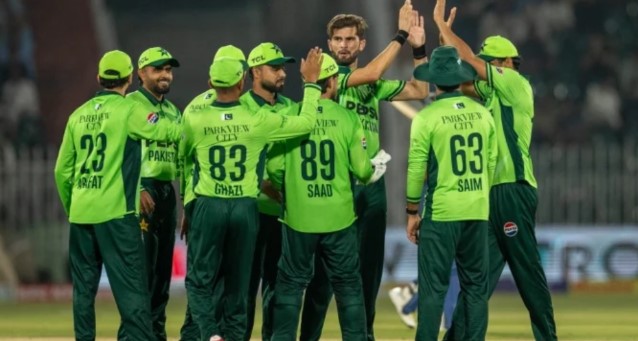
When the Pakistani team walked onto the field against India, there was neither fighting spirit in their eyes nor confidence in their body language. Their demeanor evoked pity rather than respect from the spectators. This scene was not merely a reflection of a game but of a system and mental preparation that has long been neglected. Pakistan has never lacked cricketing talent—fast bowlers, formidable batsmen, and exceptional spinners have always emerged—but repeated failures on the international stage demonstrate that natural skill alone is not enough. Successful teams across the globe do not rely solely on star players; they thrive on structured, consistent, and scientific systems. India stands as a clear example, where institutional stability, financial resources, and professional training have secured consistent global success.
The Pakistan Cricket Board has historically been vulnerable to political pressure and internal crises. Frequent changes in captains, coaches, and chairmen have disrupted team confidence and strategy continuity. Unlike India, where the Board of Control for Cricket in India plans every decision with a long-term vision, decisions in Pakistan are often reactive, influenced by immediate pressures or politics. As a result, players are left to navigate uncertainty rather than focus solely on performance. Without institutional stability, even the most talented individuals cannot reach their full potential.
Domestic cricket poses another challenge. In India, competitions such as the Ranji Trophy and Indian Premier League (IPL) provide young players with rigorous exposure to high-pressure environments, enhancing both skill and mental fortitude. In Pakistan, domestic structures have been repeatedly altered—from regional to departmental systems—leaving young players without consistent high-level competitive experience. Pitches often fail to provide realistic and balanced conditions, limiting players’ technical growth. A stable, competitive domestic structure in Pakistan would create a broader talent pool capable of handling international pressures.
Training programs and analytics further highlight India’s advantage. Every Indian player’s performance is meticulously recorded, including batting angles, bowling patterns, fielding efficiency, and strategies against opponents. Advanced AI analytics and sports science integrate into both training and match planning. In Pakistan, while such systems exist, they rarely guide decision-making. Coaches and captains often react situationally rather than proactively. By centralizing data-driven analytics and sports science in its training programs, Pakistan could strengthen individual weaknesses, optimize player potential, and field a more balanced, competitive team.
Mental toughness and pressure handling remain critical differentiators. Pakistani players often succumb to stress in high-stakes matches, while their Indian counterparts draw confidence from consistent exposure to high-pressure tournaments. Competitions like the IPL and international finals have trained Indian players to perform under immense scrutiny. Pakistan lacks long-term programs in sports psychology, pressure simulation camps, and media handling, leaving players vulnerable. Establishing permanent mental conditioning initiatives would empower Pakistani players to perform strategically and confidently under pressure.
Fitness culture is another area where India leads. Modern cricket demands agility, speed, and injury management. Indian players undergo Yo-Yo tests and maintain rigorous physical standards. In Pakistan, fitness assessments are often formalities, and long-term performance sustainability is rarely emphasized. Implementing practical, standardized fitness tests, along with rehabilitation, nutrition, and strength-conditioning programs, would enable players to maintain peak performance over extended periods.
Selection and meritocracy also play decisive roles. Indian team selections are largely merit-based and transparent, while Pakistani selections have historically been influenced by favoritism or political pressure, fostering uncertainty in dressing rooms. A meritocratic selection system would assure players that their position depends solely on performance, enhancing team cohesion and trust. Clear roles for each player, combined with strong leadership, would reduce ambiguity and promote consistency.
Leadership is central to Pakistan’s resurgence. Captains and coaches must enjoy full authority, clear strategies, and mutual trust. When every player understands their role and the team operates with consistent strategy, cohesion strengthens, and performance becomes sustainable. Strong, experienced leadership would allow Pakistan to deliver consistent results, even under extreme pressure.
Pakistan has never lacked talent, but what has been missing is a coherent, sustained system: consistent training, mental fortitude, fitness culture, merit-based selection, and leadership stability. Strengthening these pillars would enable Pakistan not merely to compete but to maintain consistent victories on the world stage. Global cricket’s strongest teams rely not on luck but on meticulous planning, disciplined training, and robust systems. When talent is integrated into a structured framework, players can perform consistently under pressure and expectations.
The Pakistan Cricket Board must operate free from political interference, guided by long-term policy. Domestic cricket should be stable, competitive, and development-focused. Young players must gain exposure to high-pressure matches. Data analytics should become central to training and match strategy. Mental conditioning, fitness culture, transparent meritocracy, and leadership stability are essential. Together, these measures could elevate Pakistani cricket into a world-class team, capable of achieving consistent success at the highest level.
Pakistan has never lacked the talent to compete with the best, but unlocking that potential requires organized, professional, and sustained systems. With these structures in place, Pakistan can stand toe-to-toe with any team globally, consistently performing at the top of international cricket. This is the real difference between raw talent and world-class performance, and the pathway through which Pakistan cricket can become a strong and confident force on the global stage.


More from Opinion News


Comments
No comments yet. Be the first to comment!
Leave a Comment