

A Crossing Between Life And Death
Friday, 13 November 2026
When Public Safety Becomes An Afterthought
Asem Mustafa Awan
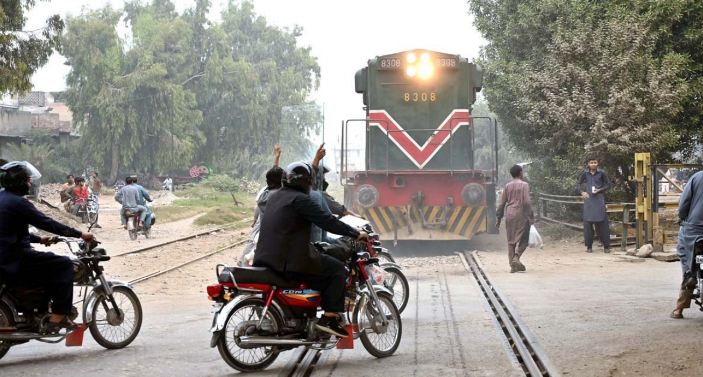
A train approaches. Motorcyclists continue crossing. One man raises his arm, apparently signalling the driver to slow down, while others attempt to clear the tracks. There is no visible barrier to stop traffic. It is a frightening scene, yet one that reflects the everyday risks faced by commuters at numerous railway crossings across Pakistan.
People appear to have grown accustomed to negotiating their own safety, judging the speed of approaching trains and hoping to reach the other side in time. But railway safety cannot depend on instinct, luck or a passer-by signalling an approaching locomotive. Proper barriers, warning systems, trained personnel and regular maintenance are basic responsibilities of the railway administration.
The institution itself faces serious questions about accountability and investment. At a September 2026 meeting, a Public Accounts Committee subcommittee examined cases involving more than Rs151 million in alleged theft and embezzlement of railway material across seven formations. It also reviewed locomotive procurement irregularities and outstanding dues of Rs468 million from private train contractors. The Railway Secretary acknowledged that the department had failed to make the investment required in its system over the past 79 years.
These findings make the question of priorities even more pressing. The World Bank estimated that 47.1 percent of Pakistan's population lived below its international lower-middle-income poverty threshold of $4.20 per person per day in FY2024.
For families already struggling to survive, a railway accident can destroy an entire future. A railway's success should not be measured by revenue alone, but by whether an ordinary citizen can cross its tracks without gambling with life.
Photo APP
More from Opinion News
Comments
No comments yet. Be the first to comment!
Leave a Comment