

World Mental Health Day: Psychiatrist Calls for Humane Mental Healthcare
Saturday, 10 October 2026
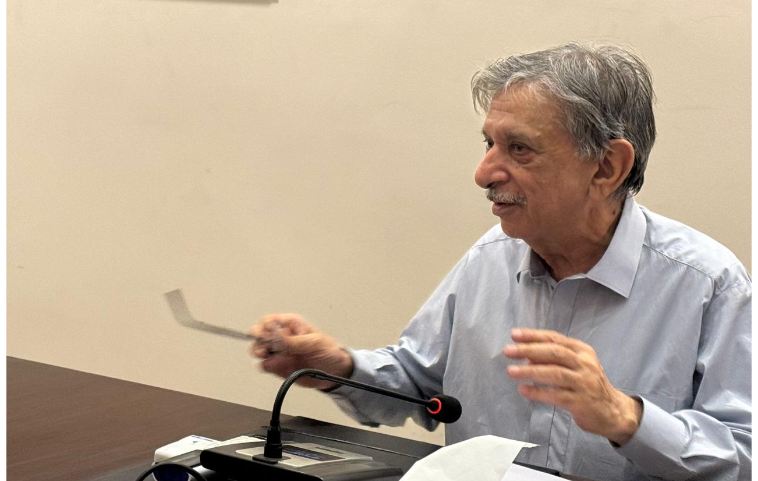
Dr. Khalid Mufti addressing an event held in connection with World Mental Health Day in Peshawar on October 10 said that listening to people who had experienced mental health challenges was essential to making treatment more humane, accessible and responsive to individual needs
Riaz Malik
PESHAWAR: Dr Khalid Mufti, head of Horizon NGO, has called for placing the lived experiences of people recovering from mental illness, substance dependence and trauma at the centre of mental healthcare, stressing that recovery must be measured by people’s ability to rebuild their lives, not merely by clinical outcomes.
Addressing an event in Peshawar marking World Mental Health Day on October 10, Dr Mufti said that listening to people who had experienced mental health challenges was essential to making treatment more humane, accessible and responsive to individual needs.
He emphasised that a person was more than a diagnosis, noting that behind every clinical record was an individual struggling to preserve dignity, relationships and a sense of belonging. Families supporting people through illness and recovery also carried experiences that deserved recognition in planning mental health services.
Drawing on Horizon’s decades of work, Dr Mufti traced the organisation’s roots to the Green December Movement launched in 1983 to mobilise communities against drug dependence. The initiative evolved into Horizon, formally established in 1986, providing a sustained institutional framework for rehabilitation and support. Through this work, the organisation assisted hundreds of young people dependent on heroin and other opioids in Peshawar, including local residents and Afghan refugees.
He said recovery required more than detoxification, with follow-up care, rehabilitation and relapse prevention playing an important role in helping people return to their families and communities. A five-year follow-up study of the initiative underscored the importance of examining recovery as a continuing process rather than a single clinical intervention.
Since its inception in 1986, Horizon has extended its mental health and humanitarian work to Afghan refugees, internally displaced people and communities affected by conflict, terrorism, earthquakes and floods. Its activities have included psychiatric treatment, counselling, community rehabilitation and support for children and families affected by the Army Public School tragedy.
The organisation has also worked with Ibadat Hospital and other partners to extend telepsychiatry consultations and follow-up services to underserved communities in Bajaur and Afghanistan, particularly Khost, while training health workers and community volunteers.
Dr Mufti urged mental healthcare providers to assess success through meaningful changes in people’s lives, including restored family relationships, renewed participation in education and employment, and greater confidence in community life.
He called for integrating lived experience into service planning, professional training and evaluation, while safeguarding privacy and respecting individuals’ choices about sharing their stories. “Mental healthcare becomes more humane when people are not merely treated but heard,” he said.

More from Health News


Comments
No comments yet. Be the first to comment!
Leave a Comment