

Mental Health Crisis Puts 32.4m Pakistanis in Need Of Care
Friday, 02 October 2026
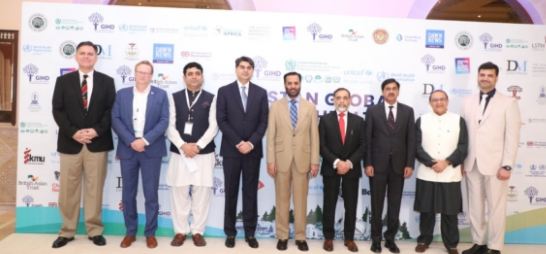
New 2026–2035 policy seeks to close a 95pc treatment gap through stronger, community-based services
Hamid Khan Wazir
ISLAMABAD: Pakistan faces a vast and largely unmet mental health challenge, with an estimated 32.4 million people requiring care while only about five percent of the population has access to mental health services, prompting the government and international health partners to launch a decade-long policy aimed at transforming the country’s capacity to respond to the chronic crisis.
The scale of the challenge was highlighted at the closing session of the two-day Global Mental Health Summit in Islamabad, where experts, policymakers, academics and representatives of national and international organisations called for urgent, coordinated action to make mental health services accessible beyond major hospitals and urban centres.
The National Mental Health Policy 2026–2035, formally launched on Thursday by Federal Minister for National Health Services and Regulation Mustafa Kamal, seeks to expand access to mental healthcare by strengthening existing services and placing greater emphasis on prevention, early identification and community-based support.
The policy provides a framework for Pakistan to address a treatment gap of approximately 95 percent, according to estimates shared during the summit. The figures underline the enormous gap between the number of people who need support and the country’s existing capacity to provide it.
On the opening day of summit, highlighting the scale of the challenge, Federal Minister for National Health Services and Regulation revealed that around 24 million people in Pakistan required psychiatric assistance, while the country had fewer than one psychiatrist for every 500,000 people, underscoring the severe shortage of specialised mental health professionals and the need to expand the country’s capacity to provide care.
WHO Representative in Pakistan Dr Luo Dapeng described the policy as an opportunity to reach millions of people who currently lack adequate mental health support and reaffirmed the organisation’s support for Pakistan’s efforts.
“Pakistan’s National Mental Health Policy is an opportunity to reach over 32 million persons who need mental health support,” Dr Luo said, stressing that mental health must be treated as an essential component of overall health.
The policy was launched during Pakistan’s Global Mental Health Summit, organised in partnership with the World Health Organization (WHO), the United Nations Children’s Fund (UNICEF) and the Global Institute of Human Development (GIHD)–Shifa Tameer-e-Millat University (STMU).
Held under the theme “Building climate-resilient and future-ready mental health systems for children, young people and communities in Pakistan”, the October 1–2 summit focused on evidence-based approaches to strengthening mental health services and building systems capable of responding to growing and complex needs.
Participants stressed that Pakistan cannot address the scale of the problem through specialised psychiatric facilities alone. They called for mental health to be integrated into primary healthcare, schools and communities so that people can receive support earlier and closer to where they live.
Greater emphasis on prevention and early identification was also highlighted as essential to reducing the burden on an already limited mental health system and ensuring that people receive support before problems become more severe.
The discussions also placed children and young people at the centre of future mental health planning, alongside the need to make services more resilient to climate-related pressures and other emergencies.
The summit brought together national and international stakeholders to strengthen coordination between government institutions, healthcare professionals, development partners and communities.
Pakistan also aims to establish the Global Mental Health Summit as a flagship international platform for advancing mental health policy, implementation science, innovation and global partnerships.
The new policy therefore marks an attempt to move the country’s response from limited access to specialised care towards a broader system focused on prevention, early intervention and community support, while creating stronger institutional capacity to address a mental health challenge affecting tens of millions of people.


More from Health News





Comments
No comments yet. Be the first to comment!
Leave a Comment