

Nana Patekar, Actor Who Made Every Silence Speak, Dies At 75
Thursday, 08 October 2026
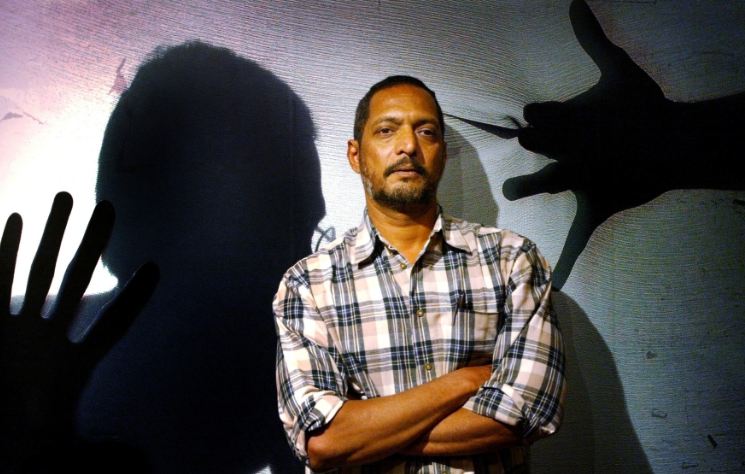
From theatre and struggling beginnings to Parinda, Krantiveer, Welcome and Natsamrat, Nana Patekar built a five-decade legacy by turning unforgettable characters into living, breathing people
Entertainment Desk
MUMBAI: For generations of Indian cinema lovers, Nana Patekar was more than an actor on a screen. He was a voice, a stare, a pause and an unmistakable presence. He could make an audience uneasy without raising his voice, make them laugh with a single expression and leave them deeply moved with little more than a silence.
On Thursday morning, Indian cinema lost that extraordinary presence. Nana Patekar, one of the most distinctive and respected actors of Hindi and Marathi cinema, died at the age of 75 after suffering a cardiac arrest at his home in Goa. He was found unconscious early in the morning and could not be revived. His last rites were announced to be held in Pune with full state honours.
His death brought an end to a career spanning nearly five decades, but it also marked the passing of an actor whose work had never depended on conventional glamour or the traditional image of a Bollywood leading man. Patekar had something more difficult to manufacture: authenticity.
Whether he was playing a terrifying gangster, a disillusioned revolutionary, a weary police officer, an abusive husband, a grieving father, an ageing theatre legend or a hot-tempered gangster caught in a comedy, he rarely appeared to be merely performing.
He seemed to inhabit the character. Born Vishwanath Patekar in Maharashtra in 1951, he came to acting through theatre before making his film debut in 1978 with Gaman. His early years were rooted in the stage, an experience that would remain visible throughout his career in the precision of his dialogue delivery, his command of silence and his ability to hold an audience's attention without depending on spectacle.
His journey to stardom was not built overnight. Patekar gradually established himself in Marathi and Hindi cinema, taking on challenging roles at a time when mainstream films were increasingly dominated by conventional heroes.
Then came Parinda.
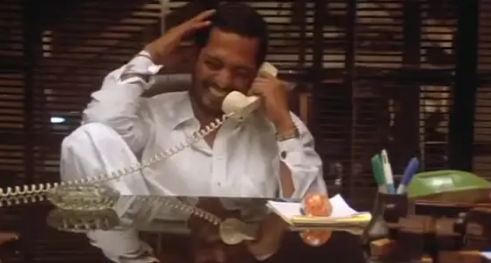
The gangster who changed the way villains were portrayed. In Vidhu Vinod Chopra's 1989 crime drama Parinda, Patekar played Anna, a ruthless underworld figure whose calmness could be more frightening than violence itself. The performance became a turning point.
Anna was not presented as a simple villain. Patekar gave him contradictions, restraint and psychological depth. His menace often came through his stillness rather than theatrical aggression. The role earned Patekar the National Film Award for Best Supporting Actor and firmly established him as one of the most formidable character actors in Indian cinema.
Parinda also demonstrated one of Patekar's greatest strengths: he understood that what an actor did not say could sometimes be as powerful as dialogue.
His pauses became part of his language. His voice became part of his identity. And his ability to shift suddenly from restraint to explosive emotion became one of the signatures of his performances.
Krantiveer: when an actor became a voice of public anger
Five years later came the role that many consider the definitive Nana Patekar performance. In Krantiveer, released in 1994, he played Pratap Narayan Tilak, a disillusioned and troubled man who gradually transforms into a fierce opponent of corruption, injustice and communal hatred.
The film gave Patekar a character through whom anger, frustration and social conscience could all be expressed. His fiery monologues became part of popular culture, while his performance earned him the National Film Award for Best Actor.
What made the performance so powerful was not simply the words. It was the conviction behind them.
Patekar delivered Tilak's anger as though it came from somewhere deeper than the script. His voice could thunder, but it could also suddenly soften. His face could move from fury to vulnerability in seconds.
For many viewers, Krantiveer was the moment Nana Patekar ceased to be simply a celebrated actor and became a cultural voice.
A career built on difficult characters
Patekar never appeared particularly interested in making himself comfortable for the audience.
He repeatedly chose characters who were complicated, damaged, morally ambiguous or difficult to love.
In Agni Sakshi, he played an obsessive and abusive husband, giving one of the darkest performances of his career. In Khamoshi: The Musical, he moved in the opposite direction, playing Joseph Braganza, a deaf father whose relationship with his daughter required a far quieter and more physically expressive performance.
He also appeared in films such as Tirangaa, Prahaar, Ab Tak Chhappan and Apaharan, continually demonstrating that he could move between different worlds without losing the individuality that audiences associated with him.
His 2004 film Ab Tak Chhappan brought another memorable character, Inspector Sadhu Agashe, a police officer hardened by years of violence and emotionally exhausted by the life he had chosen.
The performance helped define the gritty crime dramas that became increasingly popular in Indian cinema.
And then came Uday Shetty

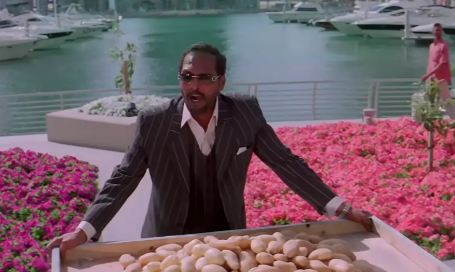
Perhaps the most delightful surprise of Patekar's career came when audiences discovered that the man famous for intense dramas could also be extraordinarily funny.
In Anees Bazmee's 2007 comedy Welcome, Patekar played Uday Shetty, a gangster whose greatest concern was finding a respectable husband for his sister.
The character could easily have become another stereotypical comic gangster. Instead, Patekar made Uday unforgettable.
His chemistry with Anil Kapoor's Majnu Bhai became one of the film's biggest attractions. The two characters' increasingly chaotic attempts to arrange a marriage turned Patekar's stern screen persona into a source of comedy. The contrast was remarkable.
The same actor who had terrified audiences as Anna could now make millions laugh simply by losing his temper.
Welcome introduced Patekar to another generation of viewers and demonstrated that his intensity was not limited to serious cinema. His comic timing, facial expressions and distinctive delivery turned Uday Shetty into one of Bollywood's most enduring comedy characters. He reprised the role in Welcome Back in 2015.
Natsamrat: perhaps the most personal performance
If Krantiveer showed Patekar at his most explosive, Natsamrat showed him at his most vulnerable.
In the 2016 Marathi film, Patekar played Ganpatrao Belwalkar, a retired theatre actor confronting old age, loneliness, changing family relationships and the painful loss of the identity he had built over a lifetime on stage.
The role seemed almost tailor-made for an actor whose own life had been shaped by theatre. Belwalkar was a performer looking back at the life he had given to art, and Patekar brought to the character the understanding of someone who knew the stage from the inside. The performance is widely regarded as one of the finest achievements of his later career.
There was something particularly poignant about watching an actor who had spent decades commanding audiences portray a man struggling with what remains when the applause fades.
More than awards
Patekar's career brought him three National Film Awards, including recognition for Parinda, Krantiveer and Agni Sakshi, as well as several Filmfare honours. In 2013, he was awarded the Padma Shri by the Indian government for his contribution to the arts and cinema. But awards alone cannot explain his importance. There were technically more glamorous actors.
There were actors with bigger box-office careers. There were actors who appeared more frequently in leading roles. Yet few could enter a scene and alter its temperature quite like Nana Patekar.
His greatest instrument was his voice, but his acting was never dependent on dialogue alone. A pause, a glance, a lowered tone or a sudden change in expression could communicate what another actor might need an entire scene to explain. That quality made him particularly suited to characters carrying inner conflict.
A life beyond the screen
Patekar's contribution to society also extended beyond acting. He was associated with humanitarian work and, along with actor Makarand Anaspure, co-founded the Naam Foundation, which worked to support farmers and communities affected by drought and water scarcity.
He also remained closely connected to theatre and Marathi culture even after becoming a major Hindi film star.
That connection perhaps explains why his performances rarely felt detached from ordinary life. He was not an actor who needed to look larger than life. He made ordinary human emotions feel larger.
The legacy of a singular performer
News of Patekar's death brought tributes from across Indian cinema and public life. Prime Minister Narendra Modi described his contribution in terms of his intensity, individuality and unmistakable presence, recognising the memorable characters he created over generations. Those words capture something essential about Patekar's career. He was never easily imitated.
His voice could be mimicked. His famous expressions could be copied. His dialogues could be repeated. His characters could inspire memes and social-media references decades after their films were released. But the actor himself could not be reproduced.
There was a particular tension in Nana Patekar's performances: toughness and tenderness, anger and vulnerability, silence and eruption. He could frighten without screaming, make people laugh without forcing a joke and break hearts without resorting to excessive sentimentality. That is why his best characters survived long after their films ended.
Anna remained.
Tilak remained.
Sadhu Agashe remained.
Uday Shetty remained.
And Ganpatrao Belwalkar remained.
They were fictional characters, but Patekar gave them the texture of real lives. Perhaps that is the greatest compliment that can be paid to an actor. He did not simply perform characters.
He made audiences believe that those people had existed somewhere before the camera arrived and would continue to exist somewhere after the screen went dark. For nearly 50 years, Nana Patekar gave Indian cinema that rare gift. On Thursday, the screen went dark for the last time. But the voice remains.

More from Entertainment News



Comments
No comments yet. Be the first to comment!
Leave a Comment