

Pakistani Universities Sign Landmark Charter for Tobacco- and Nicotine-Free Campuses
Friday, 09 October 2026
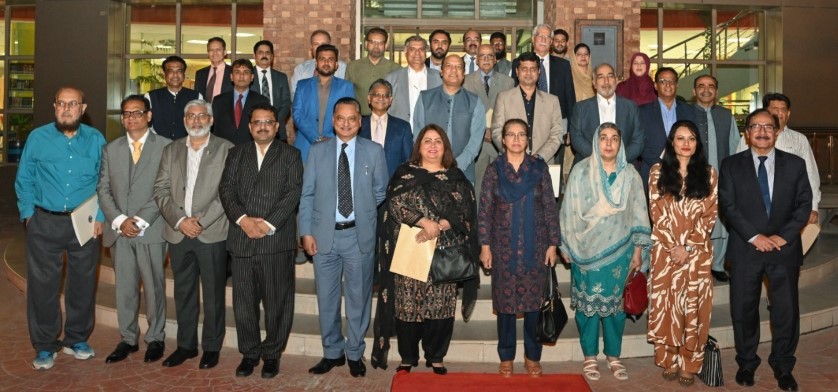
Vice-chancellors and rectors pledge coordinated action against smoking, vaping and nicotine products; charter to be sent to Prime Minister through HEC chairman.
Hamid Khan Wazir
ISLAMABAD: In a significant development, Vice-chancellors, rectors and heads of higher education institutions from across Pakistan have signed a landmark charter pledging coordinated efforts to eliminate tobacco and recreational nicotine use from university campuses and protect young people from addiction.
The charter was adopted at the fifth monthly meeting of the Vice-Chancellors and Rectors Forum, hosted by COMSATS University Islamabad (CUI) at its central library. The meeting brought together university leaders and representatives from Islamabad, Rawalpindi, Gilgit-Baltistan and Azad Jammu and Kashmir to discuss joint action on public health and key challenges facing higher education.
Under the agreement, participating universities committed to developing a coordinated strategy to establish tobacco- and nicotine-free campuses. The initiative covers conventional tobacco products, cigarettes, electronic cigarettes, vaping devices, heated tobacco products and emerging nicotine products, including nicotine pouches.
The signatory institutions agreed to work towards gradually eliminating tobacco and recreational nicotine use from their campuses through student-led awareness campaigns, research, institutional monitoring and annual assessments of progress. The measures are intended to promote healthier, safer and more supportive learning environments for students and university staff.
In a key decision, the forum agreed to forward the signed charter, along with a joint letter, to the Prime Minister of Pakistan through the chairman of the Higher Education Commission (HEC). The move seeks to encourage effective national-level policy measures to address tobacco and nicotine use among young people and strengthen the role of universities in public health protection.
Welcoming participants, COMSATS University Islamabad Rector Prof Dr Raheel Qamar, Tamgha-i-Imtiaz, highlighted the responsibilities of university leadership in responding to rapidly changing social, scientific and technological developments.
He drew particular attention to the transformative potential of emerging technologies, including artificial intelligence and quantum computing, and their convergence. He said these developments had far-reaching implications for scientific discovery, knowledge creation and the future direction of higher education.
Beyond the tobacco- and nicotine-free campus initiative, the forum discussed educational, regulatory and financial challenges facing Pakistan’s higher education sector. Participants also explored opportunities for greater institutional coordination and collective action to address these issues.
Prominent participants included Air University Vice-Chancellor Air Marshal (retd) Abid Majeed Khan; Bahria University Rector Vice Admiral (retd) Abid Hameed; FAST National University Rector Dr Aftab Ahmad Maroof; Fatima Jinnah Women University Vice-Chancellor Prof Dr Bushra Mirza; Federal Urdu University Vice-Chancellor Prof Dr Zabta Khan Shinwari; and Health Services Academy Vice-Chancellor Prof Dr Shahzad Ali Khan, alongside heads and representatives of other higher education institutions.
At the conclusion of the meeting, participants reaffirmed their commitment to stronger collaboration among universities, evidence-based policymaking, research and coordinated reforms to improve Pakistan’s higher education system.
The charter marks a collective commitment by participating institutions to address tobacco and recreational nicotine use in academic settings, with its implementation expected to depend on coordinated institutional action and effective policy support.

More from Education News



Comments
No comments yet. Be the first to comment!
Leave a Comment