

Annual inflation remains above 11pc despite weekly decline
Friday, 13 November 2026
LPG prices more than double year-on-year, while tomatoes, electricity and wheat flour also record sharp increases; SPI falls 0.46pc in a week
Hamid Khan Wazir
ISLAMABAD: Pakistan’s short-term inflation remained stubbornly high at 11.21 per cent year-on-year in the week ended November 12, despite a marginal weekly decline of 0.46pc, as soaring LPG, food and energy prices continued to squeeze household budgets, according to data released by the Pakistan Bureau of Statistics (PBS) on Friday.
The latest figures present a mixed picture of inflationary trends, with the Sensitive Price Indicator (SPI) declining from 374.61 points to 372.90 points over the preceding week, while its annual increase remained in double digits for another consecutive week.
The most alarming pressure came from LPG prices, which surged by 111.35pc over the past year, followed by tomatoes at 78.94pc, electricity charges for the first quarter at 52.38pc and wheat flour at 36.14pc. Diesel and petrol prices also increased by 30.77pc and 26.23pc, respectively, on an annual basis.
The figures indicate that despite some relief in weekly prices, consumers continue to face substantial increases in the cost of essential commodities and energy, with higher fuel and utility expenses adding to the overall cost of living.
According to the PBS, the SPI, calculated on the basis of prices of 51 essential commodities collected from 50 markets in 17 cities, recorded a 0.46pc decrease during the week under review.
The decline was largely driven by lower petroleum prices, with petrol becoming cheaper by 7.42pc and diesel by 6.10pc. Prices of onions, bananas, gur, sugar, powdered milk and pulses also registered marginal decreases.
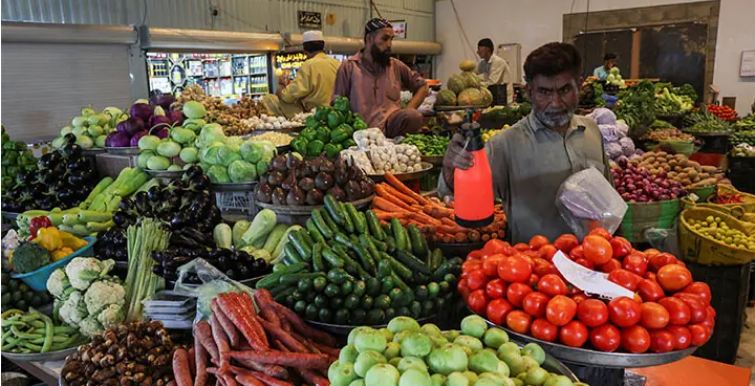
However, the relief was partly offset by sharp increases in perishable food items. Tomato prices jumped by 12.06pc in a single week, followed by eggs at 5.98pc, potatoes at 2.42pc, garlic at 1.76pc and chicken at 1.32pc. Prices of firewood, wheat flour, masoor pulse, beef and LPG also increased.
The weekly movement showed that prices of 19 commodities, accounting for 37.25pc of the monitored basket, increased, while nine items, or 17.65pc, became cheaper. The remaining 23 commodities, representing 45.10pc, recorded no change.
The impact of price movements varied across income groups. The SPI for the lowest consumption group, with weekly expenditure of up to Rs17,732, edged up by 0.03pc to 361.12 points.
In contrast, the index for households in the Rs17,733-Rs 22,888 expenditure bracket declined by 0.09pc, while those in the Rs 22,889-Rs29,517 and Rs29,518-Rs44,175 categories recorded decreases of 0.17pc and 0.32pc, respectively. The highest consumption group, with expenditure exceeding Rs44,175, experienced the largest weekly decline of 0.68pc.
On an annual basis, several essential food items also recorded substantial price increases. Onion prices rose by 19.67pc, powdered chilli by 15.55pc, mutton by 14.67pc, plain bread by 12.35pc, beef by 11.30pc and chicken by 10.98pc.
Meanwhile, some commodities became cheaper compared with the corresponding period last year. Potato prices declined by 36.41pc, sugar by 24.54pc and eggs by 23.29pc. Salt powder, masoor pulse, moong pulse, gur and bananas also recorded annual decreases.
The latest figures follow an annual SPI inflation rate of 12.31pc reported in the preceding week, indicating some moderation in the year-on-year increase. Nevertheless, the continued double-digit inflation underscores the persistent cost-of-living pressures facing households, particularly those with limited incomes.



More from Business News





Comments
No comments yet. Be the first to comment!
Leave a Comment