

Pakistan Faces Above-Normal November Rainfall Amid Rising Temperatures
Thursday, 05 November 2026
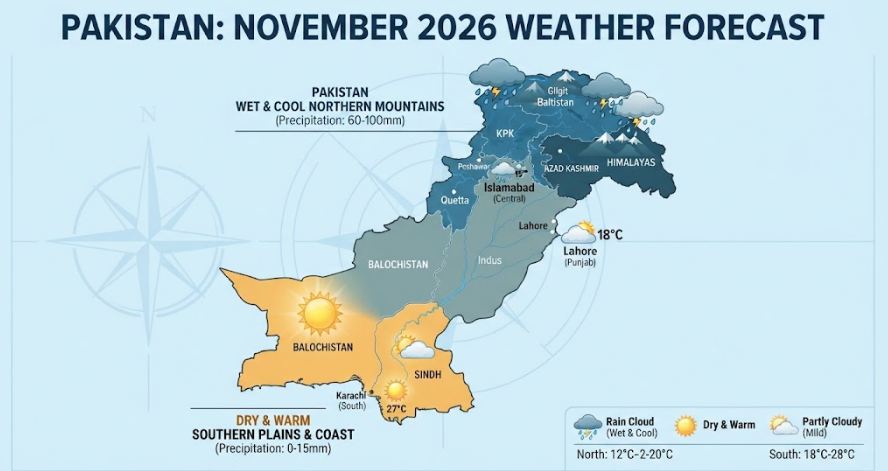
PMD forecasts heavier precipitation in northern regions but warns of rainfall deficits in Sindh and southern Balochistan, with potential implications for Rabi crop sowing, dengue prevention and visibility.
Syed Naveed Hussain
ISLAMABAD: Much of Pakistan is set to experience a wetter-than-usual November, but rising temperatures and uneven rainfall could bring fresh challenges for farmers, public health and road users, with southern parts of the country facing potential rainfall shortages, according to the Pakistan Meteorological Department (PMD).
The department's monthly climate outlook for November 2026 forecasts above-normal rainfall across much of the country, particularly in Khyber Pakhtunkhwa, northwestern Punjab and parts of Kashmir. However, Sindh, southern Balochistan and some districts of southern Punjab are likely to receive below-normal precipitation. Temperatures, meanwhile, are expected to remain above average nationwide, with the sharpest increases projected in Gilgit-Baltistan, Kashmir and northern Khyber Pakhtunkhwa.
The forecast points to a marked contrast between the country's northern and southern regions, with the anticipated rainfall distribution carrying significant implications for agriculture and water availability.
According to the PMD, most parts of the country received normal to below-normal rainfall in October. Punjab, Gilgit-Baltistan, Khyber Pakhtunkhwa and Azad Jammu and Kashmir recorded above-normal precipitation, while Balochistan and Sindh remained predominantly dry. Sindh received no rainfall during the month.
For November, most areas of Khyber Pakhtunkhwa, northwestern Punjab and parts of Kashmir are expected to receive above-normal rainfall. Central Punjab and Balochistan are likely to record near-normal precipitation, while Sindh, southern Balochistan and a few districts of southern Punjab may experience slightly below-normal rainfall.
The anticipated rainfall deficit in Sindh, southern Punjab and southern Balochistan could put pressure on water availability for irrigation in rain-fed agricultural areas and potentially disrupt the sowing of Rabi crops. In contrast, above-normal precipitation is expected to favour Rabi crop sowing and seed germination in northern Punjab, central Khyber Pakhtunkhwa and Azad Jammu and Kashmir.
The PMD has also warned that above-normal temperatures could prolong the dengue season, particularly in southern Punjab, Sindh and Balochistan, where conditions favourable for mosquito breeding may persist. Health authorities have been advised to remain vigilant and continue vector-control measures.
Fog could pose another challenge during November, as dry and cool nights may create favourable conditions for its formation, particularly in southern Punjab, Sindh and adjoining areas of Balochistan. Reduced visibility during early morning hours could disrupt road traffic and cause delays at major highways and airports.
The department has also flagged the possibility of smog across the country's plains amid deteriorating air quality. Children, elderly people and those suffering from respiratory illnesses are expected to remain particularly vulnerable to its adverse effects.
Advising farmers to consult weather updates before making irrigation and crop-sowing decisions, the PMD has also urged travellers and tourists to exercise caution during rainfall events.
The department clarified that its monthly climate outlook presents broad weather trends based on probabilistic forecasts rather than precise day-to-day predictions. It advised that the outlook should be considered alongside short-term weather advisories.



More from Pakistan News






Comments
No comments yet. Be the first to comment!
Leave a Comment