

The Business of Selling Hope To The Poor
Thursday, 05 November 2026
Asem Mustafa Awan
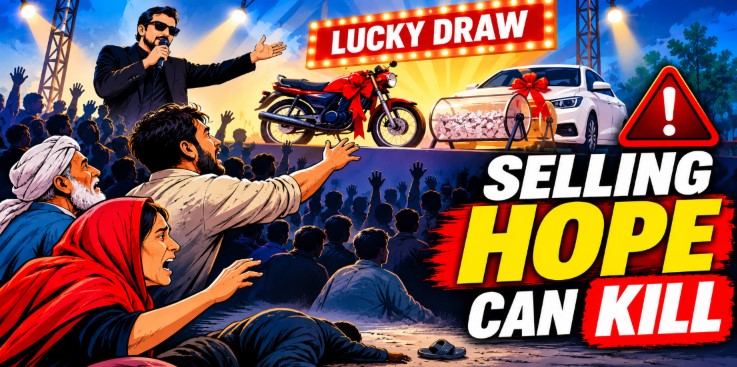
A motorcycle can be an ordinary possession for some and a distant dream for others. In Pakistan, where millions struggle with rising expenses and uncertain livelihoods, the promise of winning one can draw people from distant towns. That promise brought thousands to a wedding celebration organised by TikToker Ansar Jatt, known as Mr Patlo, in Sialkot. The gathering ended in a stampede, leaving two people dead and 18 injured.
The organisers had advertised lucky draws featuring motorcycles, a car and other valuable prizes. People travelled from different parts of Punjab, hoping for a stroke of luck. Some may have spent money they could barely spare on transport, food and the journey itself. For them, the attraction was not simply a social media personality's wedding. It was the possibility of taking home something that could improve everyday life.
When the gates opened, people surged forward. Police said an announcement directing attendees to enter together contributed to the crush. The result was devastating. Families lost loved ones, while others were left nursing injuries. A celebration built around prizes became a reminder of how cheaply human safety can be treated.
The World Bank's October 2026 poverty brief estimates that around 70 million Pakistanis live below the national poverty line. A separate international measure places the proportion at roughly 45 per cent. These figures explain why a motorcycle can carry such powerful appeal. For someone struggling with transport costs or searching for a means of earning, it represents far more than a prize.
Social media creators are entitled to earn from their work and enjoy the rewards of success. But when their announcements attract thousands, they assume responsibilities beyond generating views and engagement. A public event requires safety arrangements, crowd management and coordination with authorities. The promise of prizes cannot be separated from the duty to protect those who respond.
Police registered a case against the organisers, and several suspects were arrested. Mr Patlo received protective bail until November 10. The investigation must establish responsibility through evidence and due process.
The question is not why poor people travelled in hope. It is why their desperation has become such an easy audience to gather. Selling hope is not harmless when organisers fail to protect those who believe in it. A motorcycle may change a family's circumstances, but no lucky draw should ever cost a human life.
More from Opinion News
Comments
No comments yet. Be the first to comment!
Leave a Comment