

Oxford University Press Pakistan Brings 200+ Education Leaders Together to Shape Future of Learning at Islamabad Conference
Friday, 20 November 2026
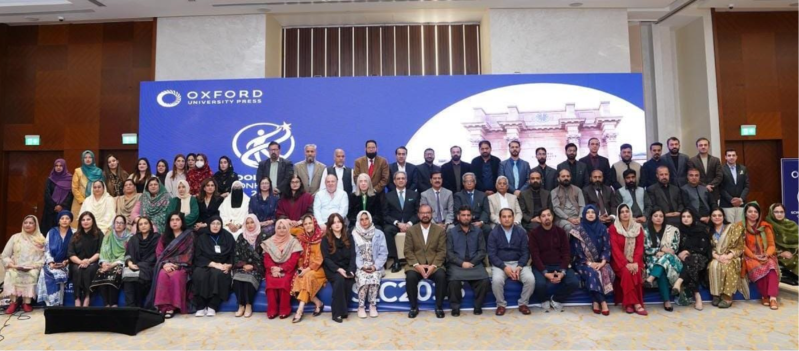
School Leaders Conference 2026 explores AI-driven education, classroom innovation and evolving leadership roles, urging stronger collaboration to prepare students for tomorrow’s challenges.
Syed Naveed Hussain
ISLAMABAD: Oxford University Press (OUP) Pakistan brought together more than 200 educationists, school leaders, teachers and industry professionals at its School Leaders Conference 2026 in Islamabad, providing a platform to explore the future of education, embrace technological advancements and address emerging challenges facing Pakistan’s education system.
Held under the theme “Shaping the Future: Navigating Change and Driving Impact,” the conference highlighted the growing role of artificial intelligence, modern teaching practices and effective school leadership in transforming learning and equipping students with the skills needed for a rapidly changing world.
Speaking at the conference, Managing Director of Oxford University Press Pakistan Arshad Saeed Hussain emphasised that sustainable and meaningful transformation in education required the collective efforts of school leaders, teachers and the wider educational community. He said educational institutions must adapt to changing requirements while maintaining a strong focus on quality and purposeful learning.
Managing Director Education at Oxford University Press UK, Elizabeth Mann, participated in a special interactive session. She highlighted that technology and modern teaching approaches could deliver meaningful benefits only when thoughtfully integrated into the educational process.
Former Vice Chancellor of the Pakistan Institute of Development Economics (PIDE), Dr Nadeem-ul-Haq, also addressed a session involving teachers associated with local examination boards. He spoke about effective change and leadership in schools.
Shazia Asad, associated with Oxford University Press, said teachers needed guidance on adapting to modern educational requirements to ensure better learning opportunities for children. She also expressed the view that Pakistan should have a uniform national curriculum rather than separate curricula for individual provinces.
Various sessions at the conference explored mathematics education in the age of artificial intelligence, modern educational resources, development of practical skills among students, and the importance of research and curiosity in science education.
According to the organisers, the conference aimed to strengthen educational leadership, promote collaboration and networking among educational institutions across Pakistan, and support the development of teaching strategies aligned with future educational needs

More from Education News

Comments
No comments yet. Be the first to comment!
Leave a Comment