

Senate Body Orders GPS-Mapped Audit of State Life Properties
Wednesday, 25 November 2026
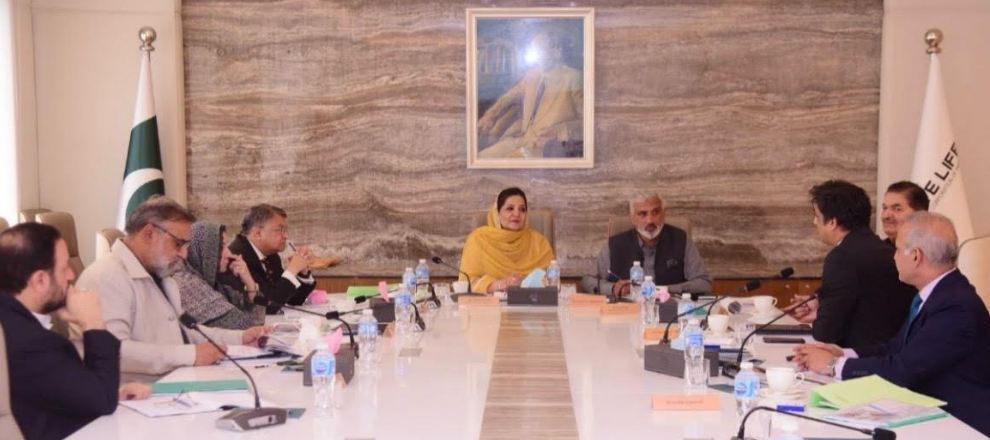
Committee raises alarm over encroachments on 6pc of SLIC’s real estate, slow resolution of disputes and delays in housing schemes; seeks comprehensive property record and action against defaulting developers
Business Desk
KARACHI: The Senate Standing Committee on Commerce has directed the State Life Insurance Corporation of Pakistan (SLIC) to conduct a comprehensive, GPS-mapped inspection of its disputed properties and submit a detailed account of encroachments, housing schemes, pending litigation and complaints by property buyers, expressing concern over the slow pace of resolving land disputes and protecting valuable public assets.
The Senate Standing Committee on Commerce, chaired by Senator Anusha Rahman Ahmad Khan, visited the State Life Insurance Corporation of Pakistan to review the corporation's performance on disputed properties, housing schemes and pending litigation.
The committee expressed concerns on sprawling cases of encroachments, though it also inquired about the claims made by SLIC. It touched upon the matter of court proceedings and property disputes taken up legally through cases filed by affectees (i.e. Youhanabad- who faced property losses through disagreement and legal discrepancies).
State Life Insurance Corporation’s team, comprising Chairman, CEO, head of legal department presented a detailed presentation on the workings of State Life Insurance Corporation. SLIC officials explained how the company operates, focusing on two main issues. About property and land disputes, they informed that about 6% of their real estate is illegally occupied (encroached upon), and resolving these cases is slowed down by court stay orders and legal delays. To fix boundary overlaps, SLIC is willing to work with local authorities and communities to officially re-measure and mark the land. They also discussed their standard procedures for handling internal conflicts, confirming that employees only face disciplinary action after a formal internal investigation into their behavior.
During a briefing on its ongoing real estate operations, SLIC presented documented Board approvals, competitive bidding records, and independent property valuations for its housing schemes.
Addressing project timelines, the Corporation noted that delays have primarily stemmed from court stay orders and non-compliance by developers. To safeguard institutional interests and enforce accountability, SLIC has actively invoked contractual penalty clauses against defaulting development partners. To strengthen legal oversight and institutional transparency, SLIC has also introduced major reforms in how it manages litigation and property leases. SLIC has deployed a centralized digital case-tracking system to monitor all ongoing lawsuits.
The Chairperson stressed that encroachment of public properties was a serious concern that required institutional attention and effective measures. She emphasised that public assets must be protected from illegal occupation and utilised transparently to generate economic value for the institution and the national exchequer.
While the Committee recognized the records provided by State Life (SLIC), they noted that progress is still too slow, especially when it comes to resolving property disputes and communicating with the public. To fix this, the Committee ordered SLIC to take the actions including providing a complete register of all properties owned by State Life, carrying out an independent, GPS-mapped (geo-tagged) inspection of every disputed property, working directly with local land revenue officials and communities to resolve property and boundary overlaps and submitting a detailed report covering housing projects, complaints from property buyers (allottees), and punishments given to rule-breaking builders.
Senator Anusha Rahman further underscored the need for accountability and proper oversight, observing that government-owned properties represent valuable national resources and must not be allowed to remain neglected or unproductive.
The Committee highlighted the importance of a transparent property management mechanism, regular monitoring and timely action against illegal occupation to safeguard institutional assets.


More from Business News




Comments
No comments yet. Be the first to comment!
Leave a Comment