

Wake-Up Call for Waziristan’s Elite: Malik Saeed Anwar Mehsood Urges Educated, Wealthy, Powerful Tribesmen to Give Back to Neglected Homeland
Wednesday, 25 November 2026
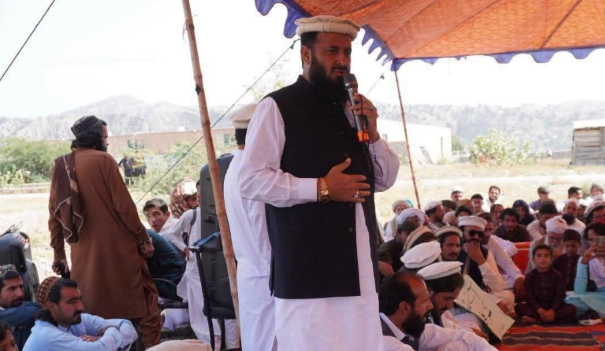
Challenging the exodus of educated professionals, bureaucrats, politicians and influential families who settle in major cities after benefiting from Waziristan’s opportunities, Mehsood Tribal elder calls on the community to return, invest, establish roots and contribute to the development of their ancestral region.
Hamid Khan Wazir
WAZIRISTAN: In a powerful appeal for collective responsibility, Malik Saeed Anwar Mehsood has challenged the educated, wealthy and influential members of the Mehsud community from Upper Waziristan to reflect on their obligations towards their homeland, questioning why so many people who achieve professional success through Waziristan's quota, domicile and public resources choose to settle permanently in major cities rather than return to serve their own people.
In a strongly worded message on his personal facebook account, the Mehsood tribal elder highlighted what he described as a troubling contradiction: while Waziristan provides educational opportunities, employment quotas, professional pathways and political platforms to its people, many beneficiaries appear to distance themselves from the region once they secure respectable positions, financial stability and influence.
He questioned why doctors, engineers, senior government officials, military officers, teachers, businesspeople and political figures who originate from Waziristan largely prefer to establish their lives in Peshawar, Islamabad, Dera Ismail Khan, Karachi and other developed cities, leaving their ancestral communities struggling with a shortage of essential services.
Doctors, professionals urged to return to their communities
Raising particular concern over the healthcare situation, he asked how many Mehsud doctors were willing to establish clinics or provide regular medical services in remote areas such as Shaktoi, Shawal, Makeen, Khaisur and Sararogha.
Despite the presence of qualified doctors and healthcare professionals from the region, many remote communities continue to lack adequate medical facilities. Even basic paramedical services remain difficult to access, forcing residents to travel long distances for treatment. He questioned why professional success achieved through opportunities linked to the region was not translating into meaningful services for the communities that needed them most.
Teachers face questions over neglected schools
He also placed particular emphasis on the responsibility of teachers, describing them as among the most valuable contributors to society because education and character-building form the foundation of every developed community.
Expressing disappointment over the condition of educational institutions, he observed that many boys' and girls' schools in Waziristan remain poorly attended or effectively non-functional, despite his estimate that nearly 90 per cent of the teaching workforce is locally recruited. He questioned how schools could remain neglected when a substantial proportion of their staff belongs to the very communities they are supposed to educate, stressing that teachers must go beyond drawing salaries and fulfil their responsibility towards the next generation.
Bureaucrats, military officers and technocrats must also answer
Malik Saeed Anwar Mehsood extended his questions to bureaucrats, military officers and other technocrats, asking what tangible contributions serving officials had made towards the development of their native region while still holding positions of authority.
He expressed concern that some individuals appear to rediscover their connection with their homeland only after retirement, when official authority and influence have diminished. He argued that public service should not become a slogan remembered only after leaving influential positions, but should be reflected in practical initiatives, institutional support and sustained efforts to improve the lives of ordinary people.
Wealthy families and tribal elites urged to invest at home
Turning to the business community and affluent families, he questioned why people who regard Waziristan as their ancestral land and source of identity hesitate to invest there or even build permanent residences in their hometowns.
He also called upon tribal elders, Maliks and Khans to examine their own responsibilities, asking how many influential families remain permanently settled in Waziristan or regularly return during the summer to spend time among local residents and listen to their concerns. According to him, the relationship with one's homeland should extend beyond family names, tribal influence and ancestral connections; it must be demonstrated through presence, investment and practical assistance.
Political leaders questioned over promises beyond election season
He also directed pointed questions at political leaders and prospective candidates who invoke their Waziristani identity during election campaigns but often appear less visible when the community faces difficult circumstances.
He asked how many political figures have their homes and families permanently settled in Waziristan and what practical role they play outside election seasons in addressing the region's persistent challenges. These include insecurity, recurring curfews, civilian casualties, educational deprivation, inadequate healthcare, poor road infrastructure, unemployment and the absence of basic facilities.
He stressed that political representation should not be limited to securing votes and making campaign promises; elected representatives must remain connected to their constituents and consistently raise their concerns at every relevant forum.
Waziristan needs commitment, not just emotional attachment
Concluding his appeal, Malik Saeed Anwar Mehsood stressed that Waziristan must not be treated merely as a source of domicile, educational quotas, government positions, political influence or economic opportunities.
Rather, it represents a collective responsibility that every educated, influential and financially capable member of the community must acknowledge. He urged people to move beyond criticism for its own sake and develop a shared commitment to returning something meaningful to the region that helped shape their careers and opportunities.
More from Pakistan News

Comments
No comments yet. Be the first to comment!
Leave a Comment