

Five Women Murdered Every Hour by Partners or Family Members: UN Report Exposes Global Femicide Crisis
Tuesday, 24 November 2026
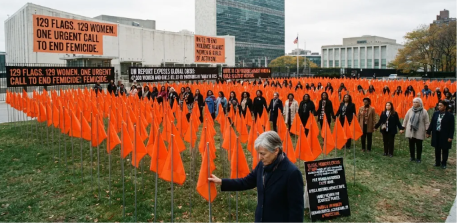
Nearly 47,000 women and girls were killed by intimate partners or relatives in 2025, accounting for 60% of all female homicides; Africa records the highest rate as UN warns that homes remain the deadliest places for women.
Hamid Khan Wazir
ISLAMABAD: A woman or girl was killed every 10 minutes by someone who was supposed to love, protect or care for her in 2025, exposing a devastating global femicide crisis in which homes continue to be among the most dangerous places for women. An estimated 47,000 women and girls were intentionally killed by intimate partners or family members during the year, averaging approximately five deaths every hour, according to a new report released by the United Nations Office on Drugs and Crime (UNODC) and UN Women.
The alarming findings, published on November 24 in the 2026 Femicide Brief, reveal that around 60 per cent of the 78,000 women and girls murdered worldwide in 2025 were killed by their partners or relatives. The figures translate into approximately 129 women and girls losing their lives every day at the hands of people within their own families or intimate relationships.
Released ahead of the International Day for the Elimination of Violence against Women on November 25, the report underscores how persistent domestic violence, harmful social attitudes, inadequate institutional safeguards and failures to protect survivors continue to put millions of women and girls at risk.
Despite years of international campaigns, legal commitments and efforts to improve women's safety, the findings show that the most dangerous threat for many women remains within their own homes.
Africa Records Highest Femicide Rate
The report highlights that no region of the world is free from femicide, although the scale of the crisis varies considerably across continents. Africa recorded the highest rate of intimate partner and family-member femicides, with 2.9 victims per 100,000 female population. The Americas followed with 1.4 victims per 100,000, while Oceania recorded 1.1.
Asia reported 0.6 victims per 100,000 female population, while Europe recorded the lowest regional rate at 0.5. The figures underline the worldwide nature of violence against women and girls, while highlighting the particularly severe burden faced by women in Africa.
Femicide Often Follows Years of Violence and Abuse
The UN agencies stressed that femicide is rarely an isolated incident, but often represents the final and most devastating stage of a prolonged pattern of violence, threats, intimidation and abuse that could have been prevented.
Many women experiencing physical or sexual violence never seek help from family members, their communities or law enforcement authorities because of significant social, economic and institutional barriers. As a result, countless victims remain exposed to repeated abuse, while perpetrators frequently avoid investigation, prosecution and punishment.
The report warns that inadequate protection mechanisms, failure to investigate warning signs and limited access to support services allow violence to escalate into fatal attacks.
UNODC Executive Director Monica Juma said alarming statistics reflected the consequences of harmful social norms, frightening attitudes and institutional failures that create an environment in which violence and killings of women become tolerated. She called for sustained action across all levels of society, including prevention strategies aimed at changing harmful attitudes, specialised programmes targeting perpetrators of domestic violence and stronger interventions to protect women's rights, dignity and safety.
UN Women Calls for Urgent Action and Accountability
UN Women Executive Director Sima Bahous stressed that women must be able to report violence safely, access protection and receive support before abuse turns fatal.
She warned that when warning signs go unreported, investigations are inadequate, victims remain unprotected and perpetrators escape accountability, the consequences can be deadly.
Bahous urged governments and relevant institutions to ensure that no warning sign is ignored, no survivor is left without protection and no perpetrator escapes justice. She emphasised that protecting women and girls from violence is a fundamental responsibility of the law and justice system, rather than merely a social commitment.
Femicide Declines More Slowly Than Global Homicides
Another major finding of the report is that femicide rates have declined considerably more slowly than overall homicide rates, highlighting the persistent nature of gender-related killings. Between 2010 and 2025, homicide rates declined nearly twice as fast as femicide rates in the Americas. In Europe, the overall homicide rate fell approximately 1.5 times faster than the femicide rate.
The findings suggest that broader improvements in public safety have not translated into comparable progress in preventing the killings of women and girls, particularly those committed by intimate partners and family members.
The UN agencies also cautioned against interpreting the lower number of victims recorded in 2025 compared with 2024 as evidence of an actual decline in femicide.
Although the estimated number of women and girls killed in private settings fell from 50,000 in 2024 to 47,000 in 2025, the difference largely reflects improvements in country-level data availability rather than a genuine reduction in killings.
UN Launches 16 Days of Activism Campaign
The findings were released as the United Nations prepares to launch its annual 16 Days of Activism campaign, running from November 25 to December 10 under the theme: "UNiTE to End Violence Against Women and Girls: Ensure Justice, Protect Survivors, End Impunity."
UN Women and UNODC are calling on governments, the private sector, United Nations agencies, media organisations, women's rights groups and survivors to join forces to prevent femicide, strengthen protection mechanisms and ensure accountability for perpetrators.
As part of the campaign, UN Women has installed 129 orange flags at United Nations Headquarters in New York, with each flag representing a woman or girl killed every day by an intimate partner or family member. The installation, titled "129 Flags. 129 Women. One Urgent Call to End Femicide," was accompanied by a gathering of 129 women from different backgrounds and generations in a collective expression of solidarity and remembrance.
The symbolic installation seeks to make the daily death toll visible and remind world leaders that violence against women and girls is neither inevitable nor a private matter that can be ignored. The UN agencies stressed that the recorded figures represent only documented cases, meaning the actual scale of the crisis could be even greater.
The report concludes with an urgent call for stronger prevention, accessible support services, effective justice systems and collective action to ensure that women and girls can live free from violence, fear and the threat of being killed by those closest to them.

More from World News



Comments
No comments yet. Be the first to comment!
Leave a Comment