

Railways Minister Admits Decades of Neglect, Sets Reform Deadline
Tuesday, 10 November 2026
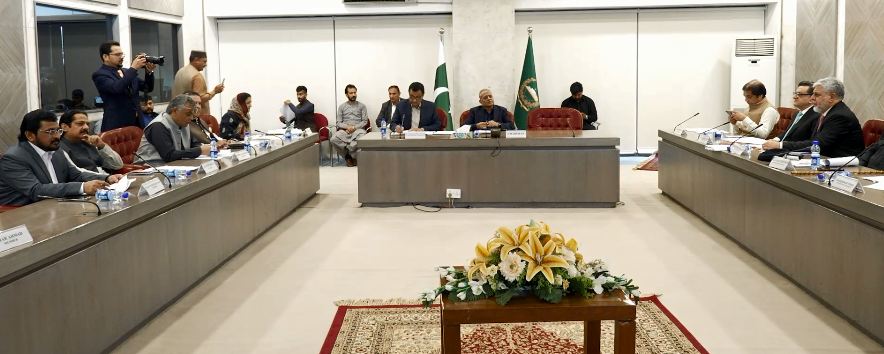
Hanif Abbasi acknowledges outdated infrastructure, ageing coaches, frequent derailments and poor passenger facilities; vows to fix up to 80pc of freight train derailment-related issues; Rs160bn revenue target set for current fiscal year.
Syed Naveed Hussain
ISLAMABAD: Federal Minister for Railways Hanif Abbasi has acknowledged deep-rooted problems plaguing Pakistan Railways, including outdated infrastructure, ageing rolling stock, frequent freight train derailments and substandard passenger facilities, admitting that the department must first recognise its shortcomings before it can undertake meaningful reforms. He has set December 31 as the deadline for resolving 70 to 80 per cent of issues contributing to freight train derailments.
Addressing a meeting of the National Assembly Standing Committee on Railways, the minister said identifying shortcomings and acknowledging existing problems were essential prerequisites for institutional reforms. He observed that challenges could not be overcome by merely claiming that everything was functioning properly while ignoring ground realities.
Abbasi said the government was taking measures to retrieve encroached railway land, including in Sheikhupura, and stressed that responsibility would be fixed in cases involving loss of human lives. He added that he had extended full support to railway officers to improve the department's performance.
Highlighting the deteriorating condition of the railway fleet, the minister said Pakistan Railways was still operating German passenger coaches dating back to the 1960s and 1970s, underscoring the urgent need to modernise its infrastructure and rolling stock. He said the department had procured necessary equipment to address recurring freight train derailments, while deficiencies in railway tracks were also being tackled. Negotiations with the Asian Development Bank for upgrading the 480-kilometre Rohri-Karachi railway track were in their final stages. The project is expected to be completed within three years.
The minister further said five railway wheel machines had been restored after repairs, while the railway steel shop had started manufacturing 23 to 24 types of spare parts. Production of another 53 types of components was expected to begin by the end of the current month.
Chairman Pakistan Railways Syed Mazhar Ali Shah informed the committee that 89 railway accidents of different categories had been reported across the country up to November 2026, compared with 92 during the corresponding period last year.
According to him, the accidents included 27 track-related incidents, 19 involving rolling stock, five attributed to road users and 20 caused by human error. He said 37 per cent of railway accidents occurred at level crossings, where negligence by road users also contributed to incidents. The Karachi railway division had reported the highest number of accident-related problems.
He added that the Punjab government had allocated Rs9.7 billion for improving dangerous level crossings to reduce the risk of accidents. Committee member Sadiq Ali Memon called for investigations into past negligence and questioned what action had been taken against officials responsible for the persistent problems facing Pakistan Railways. He said the committee was prepared to meet the prime minister to seek investment in the railway sector on the pattern of allocations made for road infrastructure.
Dr Mehrin Razzaq Bhutto suggested better utilisation of railway land and other assets, arguing that generating additional resources from these properties could reduce the department's reliance on borrowing.
Committee member Waseem Qadir also raised concerns about bedbugs, cockroaches and inadequate cleanliness in passenger trains, particularly in air-conditioned coaches. Responding to these complaints, Abbasi said the department was coordinating with the relevant company to eliminate pests and was considering the use of specialised chemicals. He acknowledged that a shortage of passenger coaches made it difficult to take trains out of service for extended periods for cleaning and maintenance.
The minister said Pakistan Railways had generated Rs115 billion in revenue for the first time during the previous fiscal year, while a target of Rs160 billion had been set for the current financial year. The department also aims to operate 14 freight trains daily to enhance its freight operations and revenue. Abbasi said rehabilitation work at Rohri Junction was underway in cooperation with the Sindh government. The People's Train service in Balochistan had received encouraging feedback, while a framework agreement had been reached with the Khyber Pakhtunkhwa government despite political differences.
Plans are also under consideration to introduce modern diesel multiple-unit (DMU) trains on eight branch routes in Punjab. Four routes could potentially be developed during the current fiscal year and the remaining four in the next fiscal year, subject to provincial funding. Sindh has also shortlisted three branch routes for similar initiatives.
The minister said the government was opening railway operations and investment opportunities to the private sector, allowing private companies to operate trains using their own locomotives and wagons as part of efforts to improve efficiency, expand services and attract investment.


More from Pakistan News
Comments
No comments yet. Be the first to comment!
Leave a Comment