

Pakistan Still Paying Price for Afghan War, Global Rivalries: Janjua
Wednesday, 11 November 2026

Former NSA urges engagement with Kabul to secure peace along the border, calls for dialogue with tribal elders and local leadership to restore stability in Balochistan.
Syed Naveed Hussain
ISLAMABAD: Former National Security Adviser Lieutenant General (Retd) Nasir Khan Janjua has said Pakistan continues to bear the devastating consequences of global power rivalries and foreign conflicts, despite having played no role in the Soviet invasion of Afghanistan or the events of 9/11.
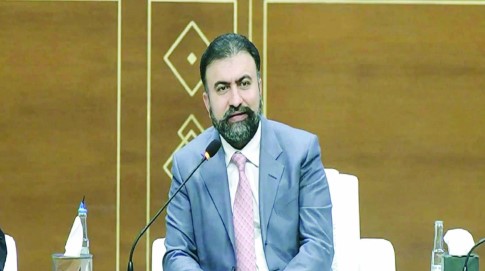
Addressing the Margalla Dialogue 2026, he said although the war waged by global powers in Afghanistan had come to an end, Pakistan continued to pay a heavy price in the form of persistent security challenges, rising terrorism and its far-reaching repercussions. He stressed that the country was still grappling with the fallout of conflicts in which it had been unwillingly drawn into the crossfire.
The Pakistani nation, he said, had paid a heavy price in blood for conflicts driven by international rivalries. Janjua said Pakistan was struggling every day to protect its sovereignty and security. He alleged that the Afghan Taliban government was allowing the Tehreek-e-Taliban Pakistan (TTP) to operate as a proxy against Pakistan, adding that the country was still fighting terrorism. He questioned how long Pakistan would continue to bear the consequences of the Afghan war.
He stressed that ending tensions with Afghanistan required engagement with Kabul, directly or through back channels. Iran, China and Russia could also be involved if necessary to help address the situation. Rather than making the handover of TTP members the sole demand, he said, Pakistan should prioritise peace along the border, describing border security as its foremost concern.
The former national security adviser said Pakistan had made enormous human sacrifices during the Afghan conflict, while the United States and NATO had withdrawn from Afghanistan. Nevertheless, Pakistan continued to face the consequences of the war and the international narratives surrounding it. He added that Pakistan had no role in the global and economic rivalry between the United States and China, yet continued to suffer the fallout of international conflicts.
Turning to internal security, Janjua identified Balochistan and Afghanistan as major challenges for Pakistan. He alleged that India and hostile intelligence agencies were active in Balochistan to fuel unrest, while elements seeking to create divisions among communities operated internationally. He called on the state to take action against such elements, saying Pakistan had defeated militant groups in Balochistan in the past and could do so again.
Emphasising the need for sustainable peace in Balochistan, he called for engaging tribal elders, strengthening contacts with local leadership and understanding the traditions and values of tribal society. He also suggested that the possible return of the Khan of Kalat should be considered and that capable leadership should be brought forward to help improve the situation.
Janjua said Pakistan had successfully overcome some of the most difficult security challenges in its 78-year history. Citing Karachi as an example, he said the city had once been gripped by severe unrest, but the state had managed to restore peace. He expressed confidence that peace could also be restored in Balochistan through an effective strategy and cooperation with local leadership.
Referring to the changing nature of the security environment, he said that in the past a police officer could enforce the law with little more than a baton, whereas today officers had to carry rifles for their own protection. The war on terrorism, he said, had inflicted losses on all sides and had produced no real victor. The United States and NATO eventually had to leave Afghanistan, while Pakistan suffered enormous human and material losses.
The former national security adviser said Pakistan had faced formidable security challenges from both the Soviet Union and India. Describing Pakistan as a nuclear power with strong security foundations, he said the country had demonstrated its capability in the conflict with India and had emerged as a courageous and victorious nation. He further claimed that Pakistan had not only defeated its adversary but had also dealt a setback to a potential rival of China.
Janjua said Pakistan had also played a role in preventing a global economic crisis and protecting the Muslim world from self-destruction. He expressed confidence that Pakistan could play an important role in uniting the Muslim world and strengthening China in the future. He paid tribute to Pakistani soldiers, saying they had never abandoned the battlefield and had demonstrated courage, resilience and steadfastness despite immense sacrifices.



More from Pakistan News


Comments
No comments yet. Be the first to comment!
Leave a Comment