

Petrol Falls by Rs 8, Diesel by Rs 7 as Inflation-Hit Pakistanis Await Wider Economic Relief
Tuesday, 10 November 2026
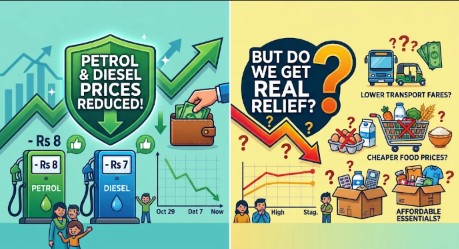
Government fixes petrol at Rs 338 and high-speed diesel at Rs 371 per litre, but consumers struggling with soaring living costs demand that lower fuel prices translate into cheaper transport, food and essential commodities
Hamid Khan Wazir
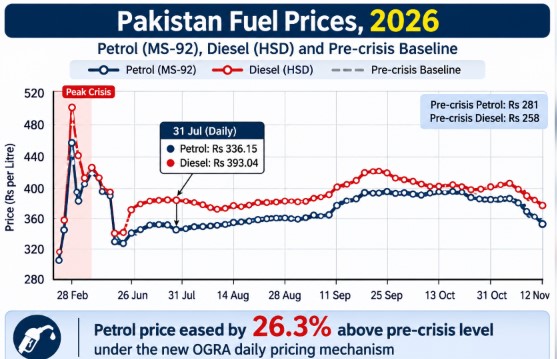
ISLAMABAD: Offering a measure of relief to inflation-battered consumers, the federal government has reduced petrol prices by Rs8 per litre and high-speed diesel (HSD) by Rs7, bringing petrol down to Rs338 and diesel to Rs371 per litre from November 11.
However, millions of poverty-stricken Pakistanis are still waiting for a more meaningful reduction in their daily living expenses, as cheaper fuel has yet to translate into broader economic relief.
The latest reduction, announced on Tuesday through a notification issued by the Oil and Gas Regulatory Authority (Ogra), comes amid persistent pressure on household budgets, rising transportation expenses and the high cost of essential commodities. While the downward revision provides immediate relief at fuel stations, its wider benefits will depend on whether transport operators, traders and other businesses pass on the reduced fuel costs to consumers.
For ordinary citizens already struggling to meet household expenses, a reduction in petroleum prices should mean more than a modest saving at the petrol pump. It should also bring down public transport fares, goods transportation charges and the prices of food and other essential commodities.
Fuel prices decline, but economic relief remains limited
Under the revised rates, petrol will be available at Rs338 per litre, while high-speed diesel will cost Rs371 per litre from Wednesday, November 11.
The government continues to collect approximately Rs114 per litre in taxes and duties on petrol and Rs100 per litre on diesel, highlighting the substantial tax burden embedded in petroleum prices.
The government had also announced on November 2 that oil refineries would shoulder a cumulative financial burden of Rs15 billion over 30 days through their contribution to the petroleum levy arrangement. The arrangement was intended to provide additional relief to consumers by allowing a reduction in petrol prices at the retail level.
Despite these successive reductions, the cost of living remains a major concern for households, particularly low-income workers, daily-wage earners, small business owners and middle-class families.
Cheaper fuel must translate into cheaper essentials
The latest reduction has renewed calls for the government to ensure that declining petroleum prices provide tangible relief across the economy rather than remaining confined to fuel stations.
Diesel is a major input for heavy transport, agricultural machinery, goods carriers, power generation and industrial operations. Consequently, lower diesel prices can reduce the cost of transporting food, agricultural produce, construction materials and other essential goods.
Similarly, petrol prices directly affect millions of motorcyclists, rickshaw operators, private vehicle owners and commuters who depend on daily transportation to reach workplaces and educational institutions.
However, consumers frequently complain that transport fares and commodity prices rise rapidly when fuel becomes expensive but are rarely reduced at the same pace when petroleum prices fall.
The government must therefore work with provincial administrations, transport authorities, market regulators and relevant departments to ensure that the benefits of lower fuel costs reach ordinary consumers.
Effective monitoring of public transport fares, freight charges and wholesale and retail prices is particularly important to prevent businesses from retaining the benefits of reduced operating costs while consumers continue paying inflated prices.
Daily pricing mechanism amid global oil market uncertainty
The government has been revising petroleum prices on a near-daily basis since July 17, following the introduction of a new pricing mechanism under which the Oil and Gas Regulatory Authority (Ogra) determines prices in line with movements in international oil markets.
The mechanism replaced the previous weekly revision system and was introduced amid continuing volatility in global petroleum markets following renewed hostilities involving the United States and Iran and concerns over international oil supplies.
Before the introduction of the daily mechanism, the government had been adjusting petroleum prices weekly since early March, alongside fuel conservation measures intended to manage possible supply disruptions.
Petrol and high-speed diesel remain among the country's major petroleum products in terms of consumption and revenue generation, making their prices particularly significant for household budgets and economic activity.
The latest fuel price reduction offers an opportunity for the government to provide broader economic relief at a time when millions of families are struggling with poverty, unemployment and the rising cost of necessities.
For Pakistan's inflation-hit and poverty-stricken population, the real measure of fuel price relief will not simply be how much petrol costs at the pump, but how much less families have to spend on transportation, food and everyday essentials. The government must ensure that every meaningful reduction in fuel costs translates into tangible relief for the people who need it most.

More from Business News




Comments
No comments yet. Be the first to comment!
Leave a Comment